
Last updated on July 3, 2024

Serra Angel | Illustration by Jodie Muir
Magic: The Gathering has so many rules. We’re talking a 292-page PDF in the MTG's official Comprehensive Rules. Most of this is highly technical language to deal with edge cases and the sheer volume of effects and abilities released since the game’s creation.
Would you believe there are even more rules to MTG than that? Many more house rules and unwritten rules are generally accepted by the player base as basic courtesy for your opponents, or something to keep you in line with the ephemeral “Social Contract” folks are always going on about in Commander.
Many of these unwritten rules evolved from general good sportsmanship at tournaments and casual Commander pods. While none of these are official rules that you absolutely must abide by, they’re commonplace enough that you’d be looked at oddly if you’d never heard of any of them, and they’re generally accepted as good sportsmanship.
Today we’re discussing some of the most popular unwritten and house rules in Magic: The Gathering. Please note that technically these rules are still “unwritten,” despite me writing them down now for you.
What Is an Unwritten Rule in Magic?
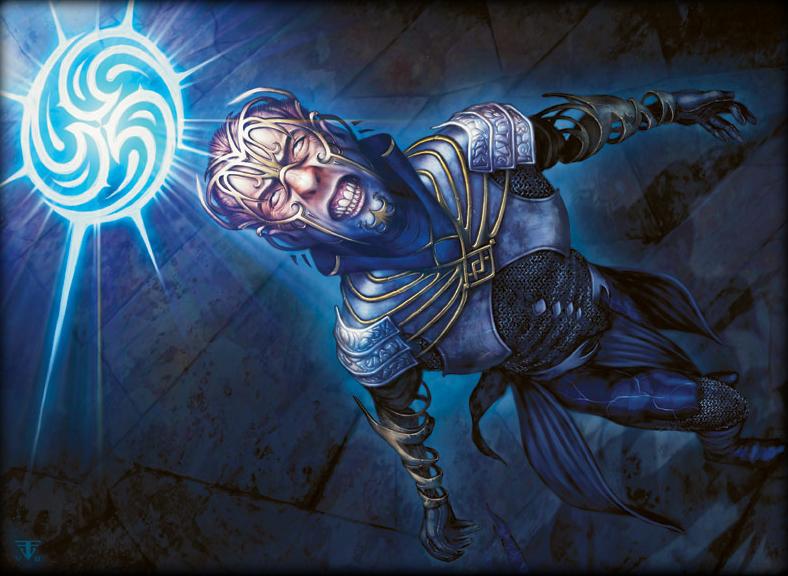
Oblivion Ring | Illustration by Franz Vohwinkel
Unwritten rules in Magic are any of the general practices that have emerged over the years and are accepted as good sportsmanship and ease of play. Some refer to your conduct at the table, some are about your actual gameplay, and some are about how you ought to act pre- and post-game.
The Official Rules
None of the rules we’re about to go over are written down in the Comprehensive Rules. If you’re looking for the exact rulings on various situations, check the Comprehensive Rules for information.
Rule #8: Off Your Phone
The advent of the smartphone has done irreparable damage to the psyche and attention span of today’s youth. We, as Magic players, need to fight the urge to scroll Instagram when it isn’t our turn. I know it’s hard; I’m also guilty of this occasionally, especially when we have to squeeze a fifth player into our Commander pod and it’s a full thirty minutes before the turn comes back to me. But, it’s a matter of respect for your opponents and respect for the game – if you miss triggers or chances to respond to spells because you were too busy tweeting, that’s your problem!
Rule #7: Shower Before the Tournament
Another semi-obvious one, but one that apparently bears repeating. Please, please, take good care of your hygiene before attending Magic events, or even just playing with your buddies at home. Magic players acquired a reputation for being… smelly… in the early ‘00s on account of the media portrayal of a bunch of nerds and dorks huddled in the basement of some LGS. I blame the Welcome to Eltingville-esque content and its adjacent Adult Swim shows.
Rule #6: Don’t Skip Priority
We all love to play fast and high-power Magic, but we still need to observe the correct timing rules for priority, and allow our opponents to respond to our actions. This is mostly applicable to veterans when going up against new players; even if you can see that this novice is tapped out and couldn’t possibly have a response, it's considered sporting to at least offer an opportunity to respond to your spells and abilities, or at the very least take a whole breath in between effects.
Rule #5: Don’t Touch Opponent’s Cards Without Asking
If your Momma raised you right, you should know this one already. It goes without saying that you shouldn’t grab at anyone else’s anything without permission, especially not their expensive little cardboard squares. It’s just good manners! It’s easy enough to say, “Can I take a look at that card?” or, “Do you mind if I place it under my Oblivion Ring?” in game, and more often than not the answer is “yes.”
Rule #4: Track Life Effectively
There are no hard and fast rules for how to track life in Magic. Many players use spindown d20s or life-counting phone apps. Competitive players tend to track life on a notepad with pen and paper, preventing any sort of mix-up on life totals. However you track life, it needs to be obvious and easy to see. A pile of d6s counting up to 40 is not an effective way to track life, nor is tracking it in your mind allowed. These actions just force your opponents to track your life and Commander damage themselves, which is unsporting conduct to say the least.
Rule #3: Offer Your Library To Cut
In official competitive matches, it's considered standard practice to offer your library to your opponent after you’ve shuffled. This shouldn’t be taken as an implication that you or your opponent believe the other is cheating or stacking their deck (in fact, it’s very hard to palm cards and cheat in a way that won’t be obvious). This small exchange of libraries is more of an agreement between the two players to have a good game.
Rule #2: Greet Your Opponents Pregame
This might seem obvious, but when playing with strangers, please make an effort to at least greet your opponents. I can’t count the number of times I’ve sat down across from an opponent and played an entire match without ever learning their name. It feels weird! Like I’m playing against a robot, or online at MTG Arena.
I know small talk can be a huge punishment for many, but we live in a society, and you literally must speak to the people around the table about something that isn’t a game action at least once to break the ice. Otherwise, you’ve doomed yourself to slogging through an at-best neutral social experience.
Rule #1: Have Fun!
The most important rule is also the most general. Remember that this game is just that; a game! Magic: The Gathering isn’t a life-or-death situation, and if it is, something has seriously gone wrong in your life. We’re all here to play a card game that’s recommended for children ages 13 and up, nobody will think less of you for losing an arbitrary card game, and I promise nobody is intentionally trying to tilt you. Sometimes you’ll draw badly, sometimes you’ll misplay, and that’s alright! What’s important is enjoying yourself and helping others enjoy themselves, too.
Rule 0 and House Rules
Rule 0 and “House Rules” are separate categories of unwritten rules. Rule 0 is an unofficial rule in Commander that allows players to modify the rules for a non-competitive game. Everyone participating in the game must agree to the rule. Rule 0 helps players define what sort of Commander game they’re looking to play; usually, it’s used to power-down the pod so the game can last longer and be more fun for everyone involved.
Rule 0 discussions typically happen pre-game and can usually involve players discussing preferences for the type of game they want to play. This is when you clear your Genju of the Realm as your Commander with the group, or let folks know you have proxies in your deck and want to make sure that’s okay. These are then implemented as various house rules to make the game enjoyable for everyone!
Some groups take it a step further and begin adding rules to create new challenges in the game. For example, when my group plays Commander with the Planechase plane decks, we’ve ruled that you get an additional free roll of the planar die on your turn before it starts costing more mana; we were sick and tired of being stuck on The Eon Fog.
Is There A Rule for How to Determine Who Goes First?
In the first game of Magic (either in a match or a single game), players must randomly determine who goes first. There is no exact method defined in the rules for this, so many players flip a coin or roll off on d6s and let the high roll go first. In a match with several games, the loser of the previous game chooses who takes the first turn.
What Is the Rule on Shortcuts?
Shortcuts are actions in Magic: The Gathering that forgo the typical order of operations for spells and effects for the sake of avoiding tedium. You’re probably using shortcuts in your games already without knowing it!
Examples of shortcuts include declaring a number of times you wish to execute an infinite loop without actually moving the cards around the board physically. Let’s say you have a Presence of Gond enchanting a 1/1 Elf Warrior token. You play Intruder Alarm, then tap the Elf to make another elf. Intruder Alarm untaps your enchanted token, which you tap again to make another elf, and so on. At any point you can demonstrate this loop to an opponent and declare a shortcut for the total number of Elf Warriors you plan to create.
If you want to execute a shortcut, you need to be able to determine the game state at any point during the loop. This means you can’t shortcut effects that rely on probability, like dice rolls or coin flips, to influence their outcomes.
Is It Against the Rules to Reveal Cards from My Hand?
Players may choose to reveal their hands or any other hidden information they know to their opponents. It’s not usually recommended, but it could be a fun mind game to flash a Counterspell at an opponent, bait them into destroying one of your untapped Islands, and then hitting them with a Force of Will instead.
Players must not actively attempt to gain information hidden from them, but they aren’t required to inform opponents who are accidentally revealing hidden information. They exiled the cards from their Necropotence face-up on accident? Take a good look, and don’t say anything!
What Rule Requires Me to Say “Good Game”?
There’s no rule requiring you to say “Good Game” after a Magic match, but it’s considered good manners if it's said honestly and you believe it was a good game. It is, however, incredibly rude to roll out the “good game” before a game has ended, even if it looks like you’ve got it sewn up. In these situations, it's best to let the loser offer a “good game” first.
What Is the Social Contract in Commander?
The Commander format allegedly includes a social contract that's inherent to its casual nature. But what is the social contract? It seems to mean different things to everyone! Many folks think the social contract boils down to the vibe and courtesy you extend to other players in your EDH pod, but some hardliners believe it comes down to the actual cards and strategies you employ.
Ultimately, the definition of the social contract is subjective to you and your play group. Maybe you really, really hate land destruction (you’d be wrong), or you really, really can’t stand stax decks (again, wrong), so your group outlaws or at least vibes out players running those cards. This sets a dangerous precedent, and we’re only a few short steps away from becoming a reddit post.
To me, Commander’s social contract is the same one that you should be living your life by, as a participating member of society. Don’t be a dick, understand that we’re all here trying to do the best we can, and recognize that you don’t have to play with anyone you don’t vibe with! It’s that easy!
Wrap Up

Presence of Gond | Illustration by Brandon Kitkouski
Magic: The Gathering is a social game at its heart. It's best enjoyed in person, with friends, around your dining room table while you shoot the breeze about your week. It doesn’t have to have so many unwritten rules, and I think you’ll find that many of these can be reduced down to just basic manners and decency.
What are some unwritten rules your playgroup uses? Do you have any fun house rules to shake up your Commander games? Let me know in the comments, or over on Draftsim's Twitter/X.
Thanks for reading, remember to mind your manners!
Follow Draftsim for awesome articles and set updates:










3 Comments
Minor correction: if you’re playing necropotence, you’re probably playing commander, in which case you should let people know about their mistake exiling cards face up. But if you’re playing in a competitive event, call a judge, since that information is meant to be hidden from both players, and if you notice and don’t call a judge you are cheating.
We allow mulligans without taking away cards until the player is happy with their hand. Only thing is you can’t keep a Sol Ring in your hand if you mulligan.
We used to play with a version dubbed “speed” rules where you can play all lands from your hand each turn and draw to seven cards each draw step with the caveat that no damage to opponents was permissible until after everyone’s third turn. Haven’t used this in awhile and not certain why actually. I’ll ask the group now that I’ve remembered it.
Also, in tournament play I got used to asking my opponents for their name while offering a handshake and a genuine good luck before match start. Anything can happen. Finally, I start every game by asking if anyone would like to additionally shuffle and cut the deck to promote fair gameplay followed by offering a d20 and asking if they would like to roll high or low to decide who plays first.
Add Comment