
Last updated on July 28, 2025

Devastating Onslaught – art by Deb JJ Lee
With Edge of Eternities, WotC is bringing us a whole host of innovative ideas to the game: From new artifact subtypes like Spacecraft, to Legendary Boros Lobsters with serious combo potential. Yesterday, the release notes for Edge of Eternities were published, introducing myriad minute (and extraordinarily difficult to understand) alterations to the 500+ page tome of rules.
One of these baffling tidbits has been making the rounds on Reddit, and we wanted to address it. In order to clarify what will inevitably be a popular card in both Standard and Commander, a new rule has been written.
The TLDR
It’s relatively easy to interpret Xu-Ifit, Osteoharmonist‘s ability at face value. It shuts off ETB abilities and takes away trample from your Colossal Dreadmaw. The new rule makes it so that Xu-Ifit erases abilities of the creatures it recurs that happen as they enter the battlefield.
Who is The New Rule For?

Xu-Ifit is a powerful Reanimate style effect with a wild drawback: The creature you reanimate “has no abilities.” If you reanimate a Viscera Seer with Xu-Ifit, you basically get a little vanilla Vampire. That’s fairly straightforward.
What if you use Xu-Ifit to get something more complicated, like Phyrexian Metamorph, for example.
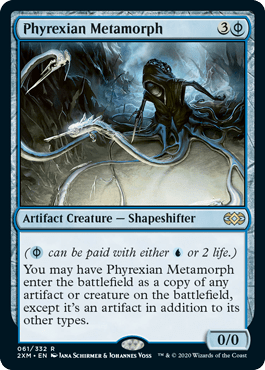
This classic Shapeshifter “enters the battlefield as a copy of any artifact or creature on the battlefield.” How do we manage that? Buckle up, because we’re about to take on a gargantuan task here: Trying explain why. Simply.
What’s The New Rule?
The new rule, Rule 613.7n, is as follows:
“If a continuous effect generated by a static ability of an object and a continuous effect generated by a resolving spell or ability that applies to that object would receive a timestamp simultaneously, such as due to an effect that puts that object onto the battlefield and sets its characteristics (see rule 611.2e), the continuous effect from the object’s own static ability receives an earlier relative timestamp.”
Nice. Reading the rule explains the rule, right?
Let’s plug our Phyrexian Metamorph example in here. Firstly, both Metamorph and Xu-Ifit, Osteoharmonist‘s abilities are classified as continuous effects.
- In this case, Metamorph’s continuous effect is a “static ability of an object.”
- “Entering the battlefield as a copy” is “an effect that sets its characteristics.
- Xu-Ifit’s is a “continuous effect generated by resolving a spell or ability.”
The next part of this gets into layers, which I highly recommend reading our guide on. Layers are a necessary, yet extremely complex way to order the way effects happen.
When two effects happen on the same layer, we need clarity on which one happens first: Each effect needs a specified timestamp.
So….What?
Thanks to rule Rule 613.7n, the timestamp order of these situations is crystal-clear. Using Xu-Ifit to recur Death's Shadow is sadly not as cool as theorycrafters wanted it to be. However, if you recur Sleep-Cursed Faerie with Xu-Ifit, it enters without flying, ward 2, its untap ability, OR 3 stun counters.
Recurring something like Stenn, Paranoid Partisan with Xu-Ifit? It will no longer have an ability to reduce the costs of your spells with.
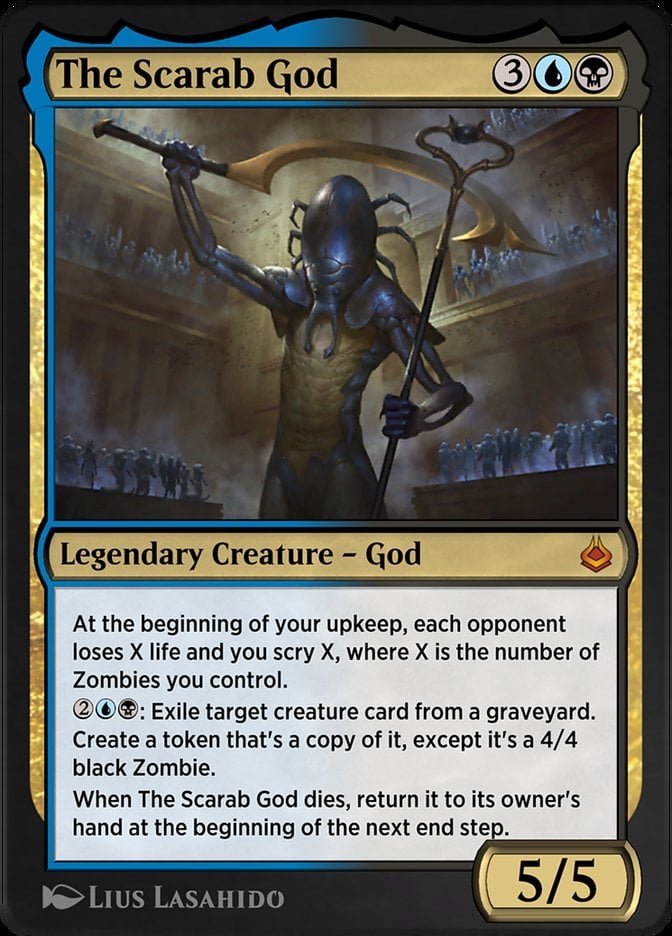
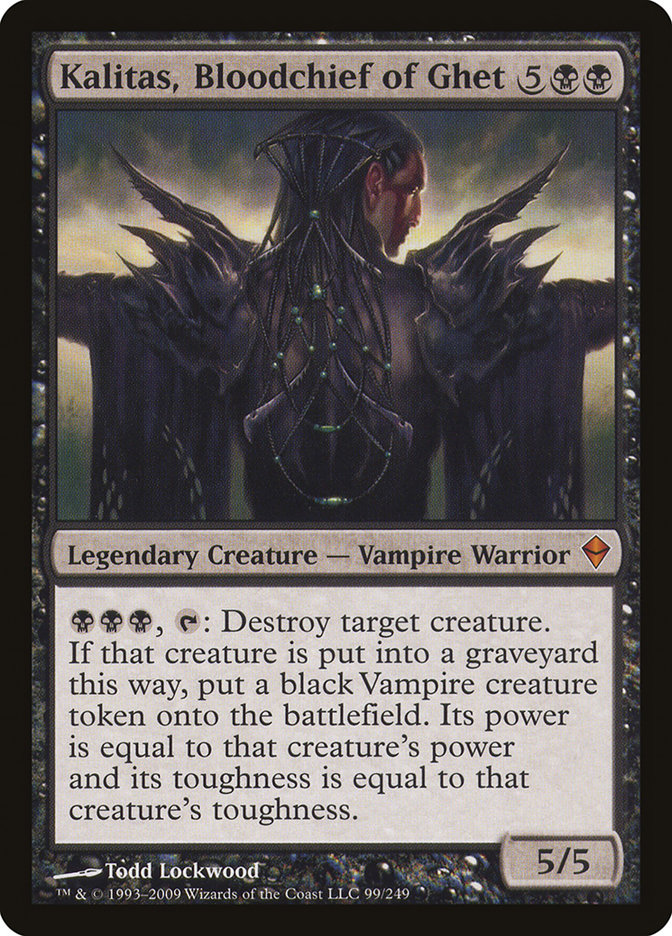
We’ve seen comparable Standard-legal effects on cards like The Scarab God and Kalitas, Bloodchief of Ghet. However, no other card in Magic’s history does quite what this brand new 3-drop Human Wizard from Edge of Eternities does.
Follow Draftsim for awesome articles and set updates:









13 Comments
I think you have a few misunderstandings here.
Death’s Shadow will be a 13/13 if reanimated. Even though the -x/-x effect has an earlier timestamp than the “loses abilities” effect, it is in a later layer (7 for p/t modifications vs 6 for ability removal). Timestamps are only used when effects are in the same layer.
613.7: Within a layer or sublayer, determining which order effects are applied in is usually done using a timestamp system. An effect with an earlier timestamp is applied before an effect with a later timestamp.
If the only rule to change was the one you quoted, Sleep Cursed Fey will still enter with stun counters. That is because replacement effects only take into account specific things when deciding if they should apply. None of the things the later half of 614.12 ask you to take into account include continuous effects that are generated by something else and which do not exist prior to it entering the battlefield.
614.12: Some replacement effects modify how a permanent enters the battlefield. (See rules 614.1c-d.) Such effects may come from the permanent itself if they affect only that permanent (as opposed to a general subset of permanents that includes it). They may also come from other sources. To determine which replacement effects apply and how they apply, check the characteristics of the permanent as it would exist on the battlefield, taking into account replacement effects that have already modified how it enters the battlefield (see rule 616.1), continuous effects from the permanent’s own static abilities that would apply to it once it’s on the battlefield, and continuous effects that already exist and would apply to the permanent.
A similar thing is true of Phyrexian Metamorph. It will still enter as a copy of something but once on the battlefield it won’t have any abilities and if it’s a creature it will be a skeleton. This is unchanged by 613.7n since each of the continuous effects affecting it does so in different layers (copy, type changing, ability removing)
I haven’t been able to find an updated version of the CR which has this yet (the release notes don’t seem to mention it) so I can’t say if there’s another rules change that affects ETB replacement effects, but as is the rule quoted here doesn’t seem to change them at all.
So whats the solution now? They need timestamps, but what does that mean? I ready this article so i understand the interaction between those 2 effects, instead it doesnt answer anything. Does it enter as a copy or not? Sorry If i missed something due to english not beeing my first language, but to me you did not explain what happens.
Hi, i think there are some misconceptions in the article, ranging from using an example where you don’t actually explain the final outcome (metamorph) and an example that is worded in a misleading way (death shadow).
The new rule makes it so that for purposes of evaluating chatacteristics of the resulting permanent, we pretend that the effect of xu applies as an aura placed on the creature afterwards. However, the xu effect removes abilities and that applies before the creature enters, so it removes the cloning ability from metamorph. But that part of the rules isnt new. Its been like that since blood moon + vesuva!
Please revise the article, since as of right now, it feels more misleading than not.
Please put the tldr first.
Will do!
Was this really that confusing? It has no abilities which means it has no abilities.
I think it’s more the rule is confusing, not the specific interactions.
As Tim said, the article was meant to address the complexity in the rule itself.
Then I blink it
You never finished the phyrexian metamorphosis example. It sounds like the metamorphosis would still copy something, but it would lose all abilities. So you could copy a fat creature, but it would only get its P/T, not any abilities that creature has. Is that the case?
Also, you didn’t leave it clear what would happen to the shapeshifter. Would it become another creature first and then that creature loses its abilities?
Echoing other posters. You didn’t finish your copy example. Also please address the death shadow different layer point.
So if “has no abilities” has a later timestamp, that means it overwrites all abilities defined on the card, so my guess would be the metamorph would enter as a 0/0 shapeshifter skeleton and die.
But if there was a card saying something like “whenever a creature would enter (…) enters as a copy of…” then it would conflict with this, so who defines the order then?
Add Comment