
Last updated on February 23, 2026

Jalum Tome | Illustration by Ben Hill
Magic: The Gathering has printed some truly strange cards over the years, but few are as bizarre—or as valuable—as the ones that don’t even look like real Magic cards. Ever seen something that looks like a sticky note glued to cardboard and thought, there’s no way that’s worth money? Well… buckle up.
Today we dive into original playtest cards, the rough, handmade prototypes that helped shape the earliest days of Magic. These oddities may look like classroom worksheets or art project scraps, but they’re actually some of the rarest pieces of MTG history you’ll ever find. Intrigued? Let’s get into it!
What Are Original Playtest Cards in Magic: The Gathering?
Slayer’s Bounty | Illustration by Aurore Folny
Original playtest cards are early prototypes that the creators of Magic used to test out the game before it was officially released.
Back in 1992, long before Alpha hit store shelves, the designers didn’t have special software or professional printing tools. They literally photocopied text onto colored paper or glued printed text onto real cards to see how their ideas would work in an actual game. Playtesters would then try them out, give feedback about the rules and power levels, and help to shape the game. Since these cards changed constantly, they were made fast and cheap—often just paper with typed or handwritten notes, or even simple doodles standing in for art.
It’s also worth noting that these aren’t the same as the Mystery Booster-style playtest cards released years later; those were designed as fun, intentionally printed cards for players, not the real behind-the-scenes prototypes used to build Magic from the ground up.
Examples of Original Playtest Cards
Before Magic’s very first real set came out, Wizards created five rounds of prototype cards. They’re known as the Alpha, Beta, Gamma, Delta, and Epsilon playtest sets. Each round helped to shape how the final game would work.
Alpha Playtest Cards
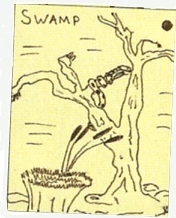
Alpha playtest cards come from the very first version of Magic ever tested back in 1992. Richard Garfield put together a single 120-card deck that had all five colors, lands, and a few artifacts. Players would split the deck and play to see if the core rules actually worked. These cards looked extremely rough: yellow cardstock, photocopied text, handwritten notes, and simple doodles instead of finished art. They even used the old ante rule, where you could permanently lose a card each game.
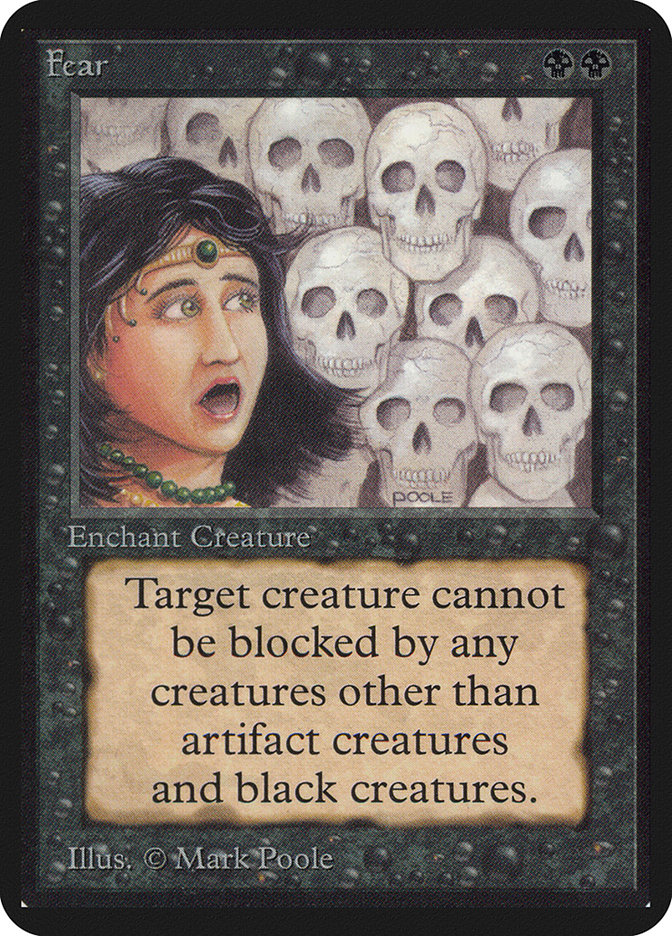
Most of these early cards are still with Garfield or the original playtesters, so collectors rarely get the chance to see them in person. One famous example is a card called Fear, which later inspired the real spell printed in Magic’s early sets.
Beta Playtest Cards
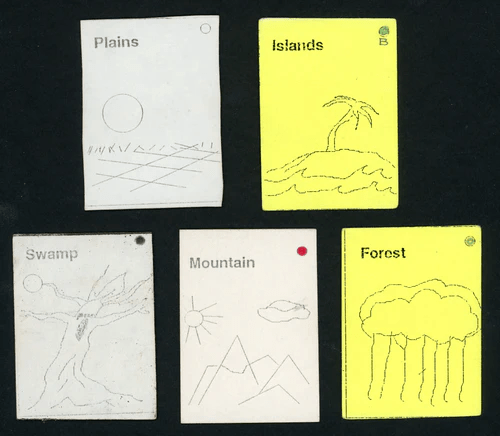
The Beta playtest was the next step and a lot more advanced. This time, instead of one shared deck, around 20 testers got their own 60-card decks. Beta cards still looked rough, but the structure of real Magic started to form here, like switching from a single stat for creatures to separate power/toughness. They also shifted mana symbols from colored circles to the letters W, U, B, R, G.
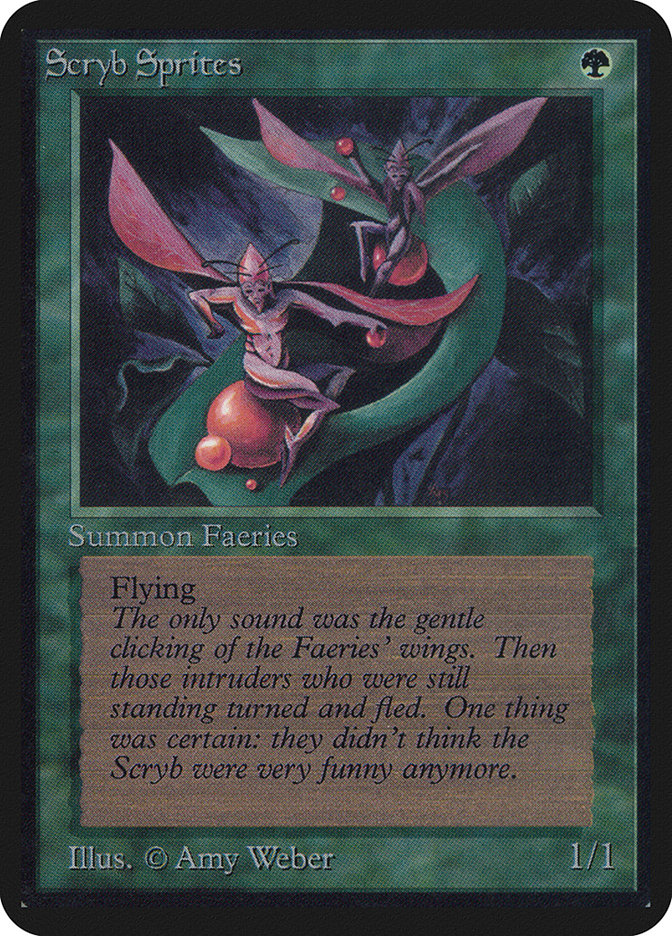
A neat example is a Beta card named Fairies, which later became Scryb Sprites in Limited Edition Alpha. Other known cards from this stage include early versions of Instill Energy, Barren Sinkhole, and Wall of Brambles, all appearing as photocopied templates with hand-colored elements. These Beta playtest cards came on paper in all sorts of random colors, and roughly 125 unique cards from this era are known to exist today.
Gamma Playtest Cards
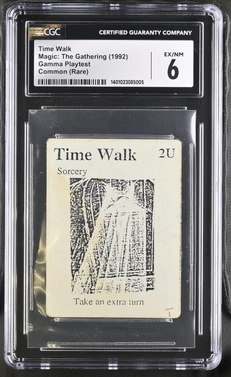
Gamma was the biggest and most important test. Around 40 players joined in, and nearly the entire Alpha/Beta final card list was included here—about 250 out of the first 295 printed cards. The cards were smaller than normal Magic cards and printed on light gray sheets. By this point, every card had art, though most images were borrowed from books or comics just as placeholders.
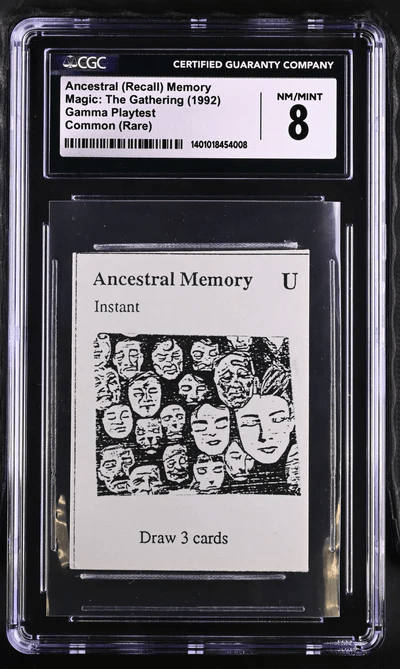
A famous example is Ancestral Memory, the prototype for Ancestral Recall, and versions of iconic spells like Animate Artifact and Animate Dead also appeared in this early form.
Some Gamma cards are incredibly valuable because they’re so close to the first real Power Nine: One copy of Ancestral Memory has sold for over $22,000. The Gamma playtest even tracked league cards with a tiny unicorn stamp on the back! Since Garfield saved the original sheets, we actually know the full Gamma spoiler today.
Delta Playtest Cards
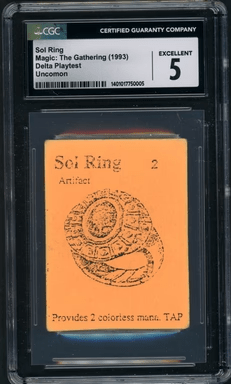
Delta came after Gamma and was focused on fine-tuning balance before the final printing stage. It had roughly the same number of designs, but fewer copies made, and only a smaller group of testers participated.
Many Delta cards look almost identical to their Gamma versions, just with tiny tweaks to rules text or mana costs, though some brand-new cards appeared here, too. One huge milestone: The first playtest versions of the dual lands showed up in Delta, including early takes on Savannah. Cards like Blue Elemental Blast, Armageddon, and even another version of Ancestral Memory also appeared during this phase.
Delta cards were printed on bright orange cardstock, which makes them easy to identify at a glance. Sadly, a lot of Delta cards were destroyed afterward, leaving only about 150 known Delta cards that survived. A Delta Ancestral Memory has even sold for around $18,000, showing just how scarce and desirable these pieces of Magic history are today.
Epsilon Playtest Cards
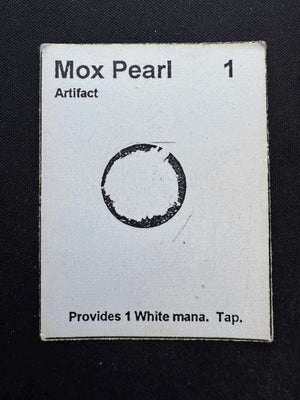
Epsilon was the final playtest round before Magic officially launched, and by this point the designs were extremely close to the real thing; many cards looked almost identical to what would appear in Alpha just months later.
Even so, some new additions first surfaced here, including early playtest versions of cards like Orcish Artillery, Dragon Whelp, Dwarven Demolition Team, Paralyze, and Lance. Other recognizable spells like Animate Wall and Copy Artifact also appeared in Epsilon form.
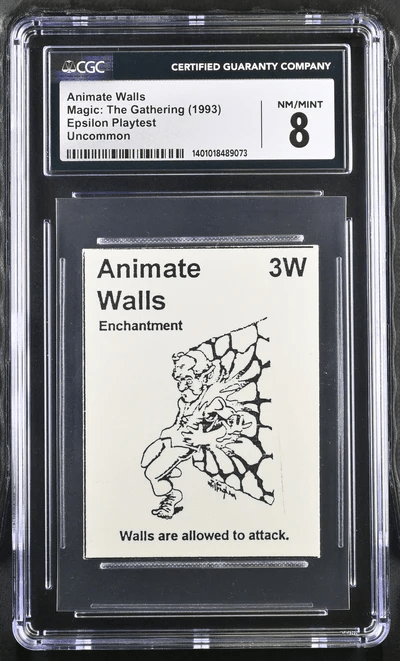
These cards usually featured cleaner placeholder art and were printed on sturdier white cardstock, which gave them a noticeably more polished look compared to earlier tests. There’s no fully confirmed checklist, but collectors estimate around 230 different Epsilon cards still exist today. Even the less flashy cards command serious value: An Epsilon Animate Wall can sell for around $1,000, and rarer iconic cards can go much higher.
Are Original Playtest Cards Valuable?
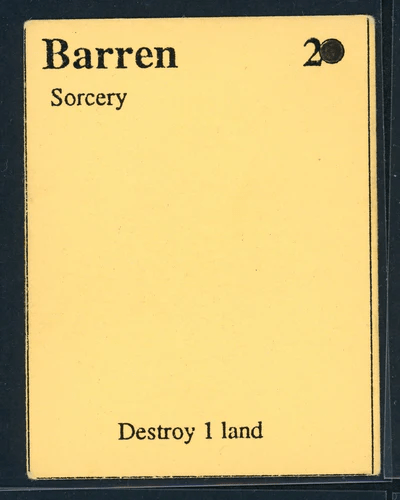
Definitely! Original playtest cards are some of the rarest Magic collectibles, since only a small number were ever made and even fewer survived. Because of that, prices can get wild. A Gamma playtest version of Ancestral Recall (called Ancestral Memory back then) was listed for around $22,500. Even smaller names can be pricey, like a Beta playtest Sinkhole called “Barren” at about $2,000 on AncestralMTG.com, or Gamma cards like Animate Wall going for around $900.
Condition and proof of authenticity make a big difference. These cards were played with decades ago, so many show wear. Graded cards from companies like CGC can sell for more because buyers know they’re real and in good shape.
Overall, original playtest cards feel like owning a piece of Magic’s earliest history, but be ready to spend big if you want one.
Where Can You Buy Original Playtest Cards?
AncestralMTG

AncestralMTG is one of the most trusted places to buy high-end Magic collectibles. They often have original playtest cards available, sometimes already graded, sometimes raw but with a certificate of authenticity. Their listings usually include scans and details about the card’s history, especially for rare Gamma and Delta playtest cards. Prices can be high, but the peace of mind and reliability make it a go-to spot for serious collectors.
Major Online Marketplaces
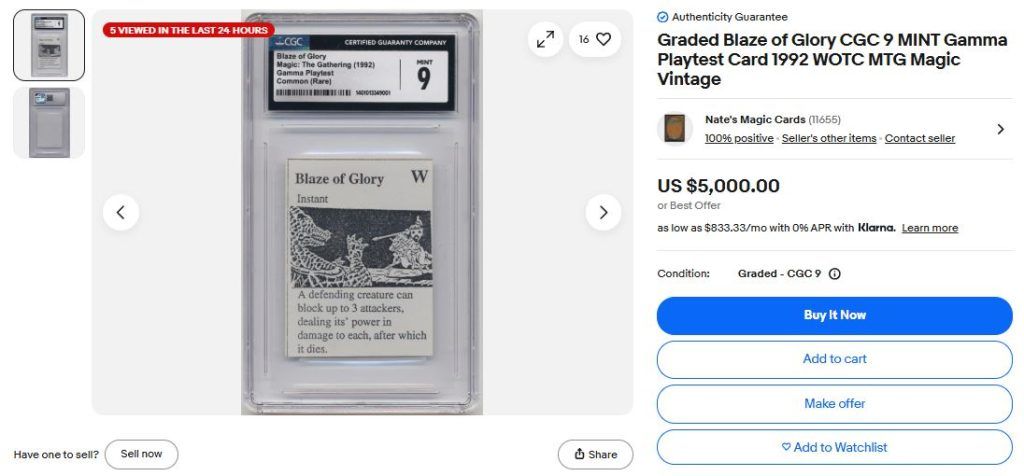
Every now and then, playtest cards show up on eBay and other auction sites, usually from private sellers. You might see something like a graded Gamma version of Blaze of Glory listed for around $5,000. If you shop here, be careful to check the seller’s reputation, look for graded cards, and make sure there’s proof of authenticity. eBay even has an authenticity guarantee for some high-value listings, which helps, but it’s still important to do your own research.
Auction Houses
Large auction companies like Heritage Auctions sometimes offer original playtest cards, especially when a particularly famous one hits the market. For example, they sold a Gamma Time Walk in 2021. Auction houses are great for big-ticket items, but competition can get intense since collectors all over the world are watching. Prices can soar quickly, but they can occasionally slip lower if the right bidders aren’t paying attention.
Collectors’ Communities
A lot of buying and trading happens privately through the misprints and oddities community. Facebook groups and online forums are common places where collectors connect and sometimes sell or trade original playtest cards. This can be a great way to find hidden gems or network with experienced collectors. However, trust is everything in private deals, so always verify authenticity and use secure payment methods.
Playtest Cards vs. Test Prints
Playtest cards and test prints might sound similar, but they serve totally different purposes in Magic’s history. Playtest cards were made by the game’s designers to experiment with rules and balance long before real printing began. They look rough, often just photocopied text, handwritten notes, or stickers on a card, because the goal was simply to see if the ideas worked during gameplay.
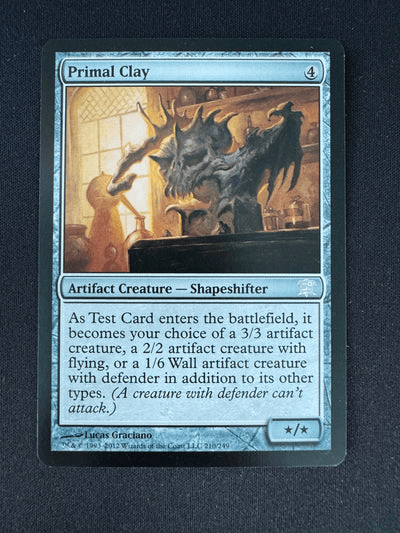
Test prints, on the other hand, come from the production side of things. These cards were printed by manufacturers to check how new frames, colors, foiling, or other technical features would look before a real set released. They usually look much closer to a normal Magic card, but with strange details, like the wrong back, alternate frames, or even crystals glued on for testing special effects.
Playtest Cards vs. Misprints
Playtest cards and misprints might both look unusual, but they come from completely different parts of Magic’s creation. Playtest cards were intentionally made during early game design to test ideas, rules, and card balance. They usually look unofficial, with plain paper, office-printer layouts, black-and-white text, sometimes even handwritten notes, because they were never meant to be sold or packed into boosters.
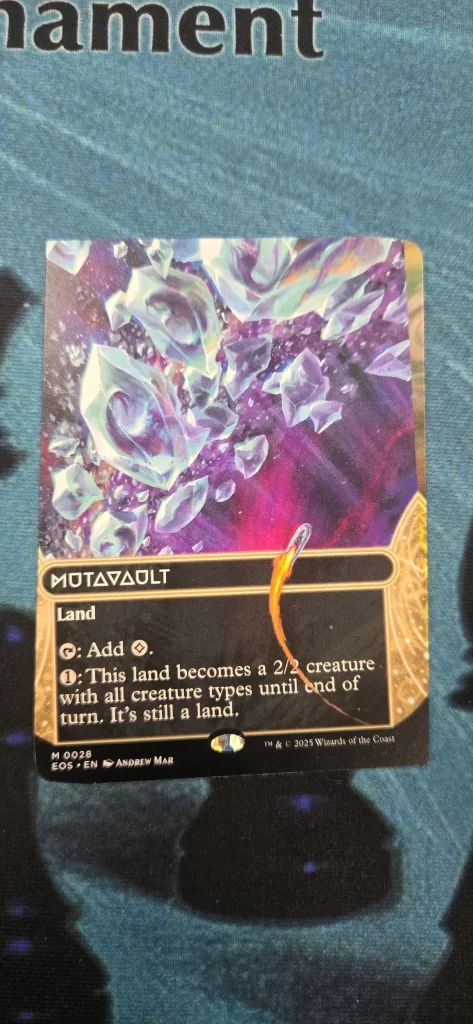
Misprints, on the other hand, are real Magic cards that had something go wrong during production. Maybe the colors were printed wrong, the card was cut off-center, or half of one card ended up on another. These are accidents from the factory, not design tools. They still look like official cards overall, just with obvious (and sometimes funny) mistakes.
Collectors enjoy both, but for different reasons. Playtest cards are prized because they represent Magic before it was finalized. They’re tiny pieces of history. Misprints are loved for how weird and unique they can be, since no two errors are exactly alike.
Wrap Up
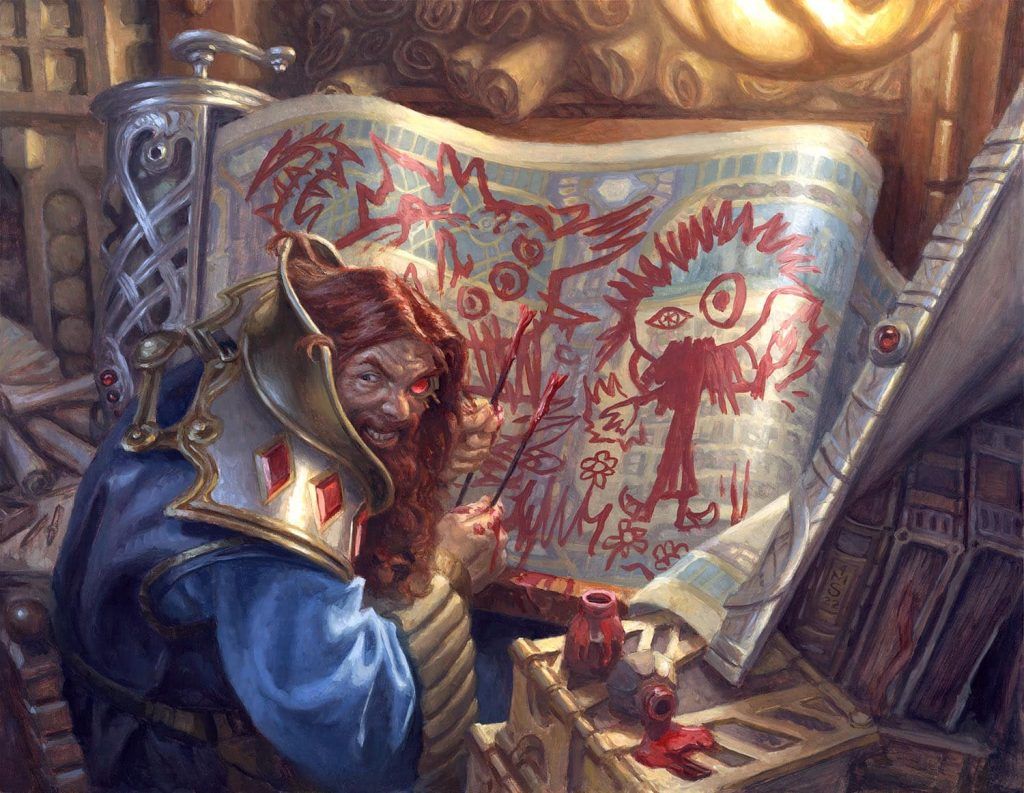
Guff Rewrites History | Illustration by Matt Stewart
Magic has a funny way of tempting us to spend money on cardboard, doesn’t it? Playtest cards are an important part of the game’s history. These rough early versions helped to shape the Magic we all love today, and it’s no surprise that collectors go wild for them whenever they surface.
Have you ever seen a real playtest card up close? Tell me in the comments or on the Draftsim Discord! And as always, thanks for reading; if you enjoy deep dives like this, be sure to follow us on social media so you never miss a new article. And do yourself a favor and hop on over to AncestralMTG if you ever fancy adding one of these to your collection.
Take care, and see you next time!
Note: this post contains affiliate links. If you use these links to make a purchase, you’ll help Draftsim continue to provide awesome free articles and apps.
Follow Draftsim for awesome articles and set updates:










Add Comment