
Last updated on February 3, 2026

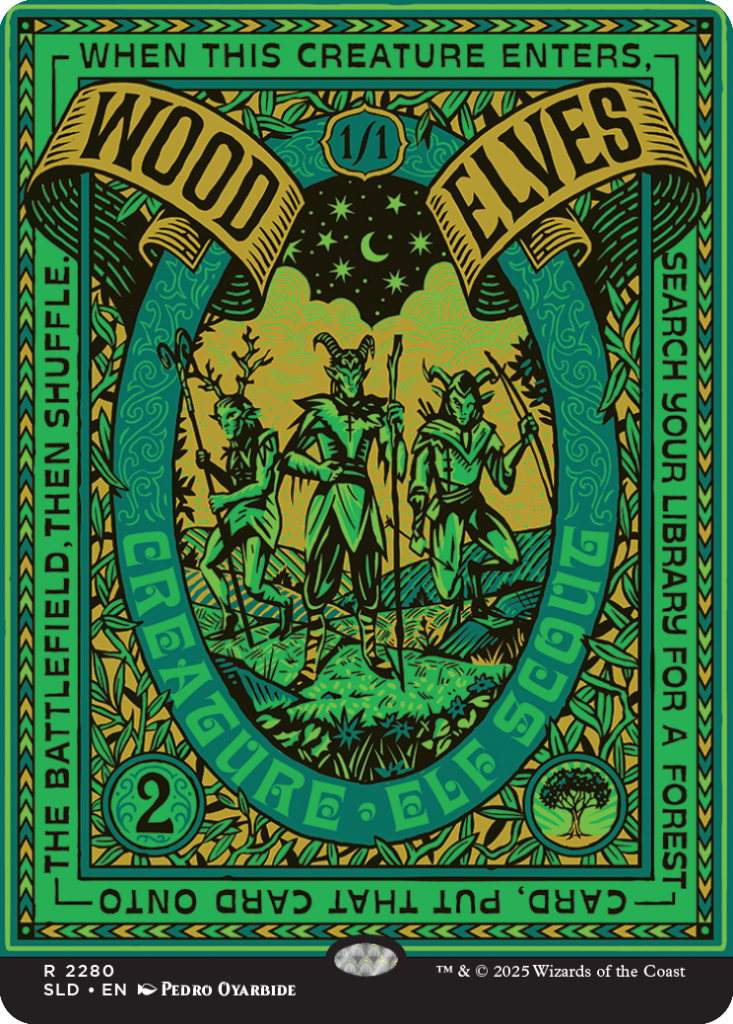
Wood Elves | Illustration Pedro Oyarbide
Wizards just dropped a new Secret Lair under the “Chaos Vault” label. And this time the chaotic twist isn’t unique art style, or bonus cards, or a famous artist.
It’s pricing.
According to WotC’s official announcement and the “Prints Charming” Secret Lair description, there’s TEN different prices for just TWO products.
Source: WotC
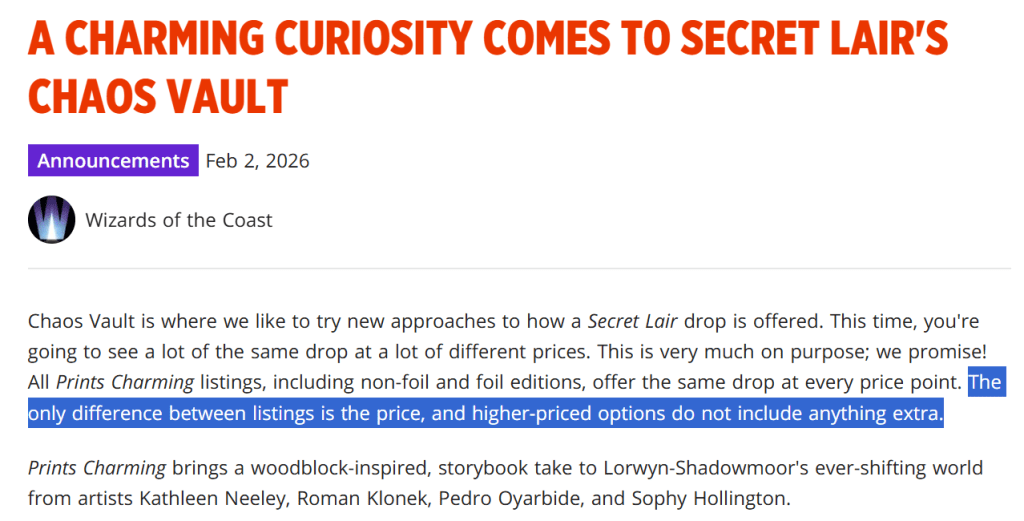
“Chaos Vault is where we like to try new approaches to how a Secret Lair drop is offered. This time, you’re going to see a lot of the same drop at a lot of different prices”, reads WotC’s announcement. “The only difference between listings is the price, and higher-priced options do not include anything extra.”
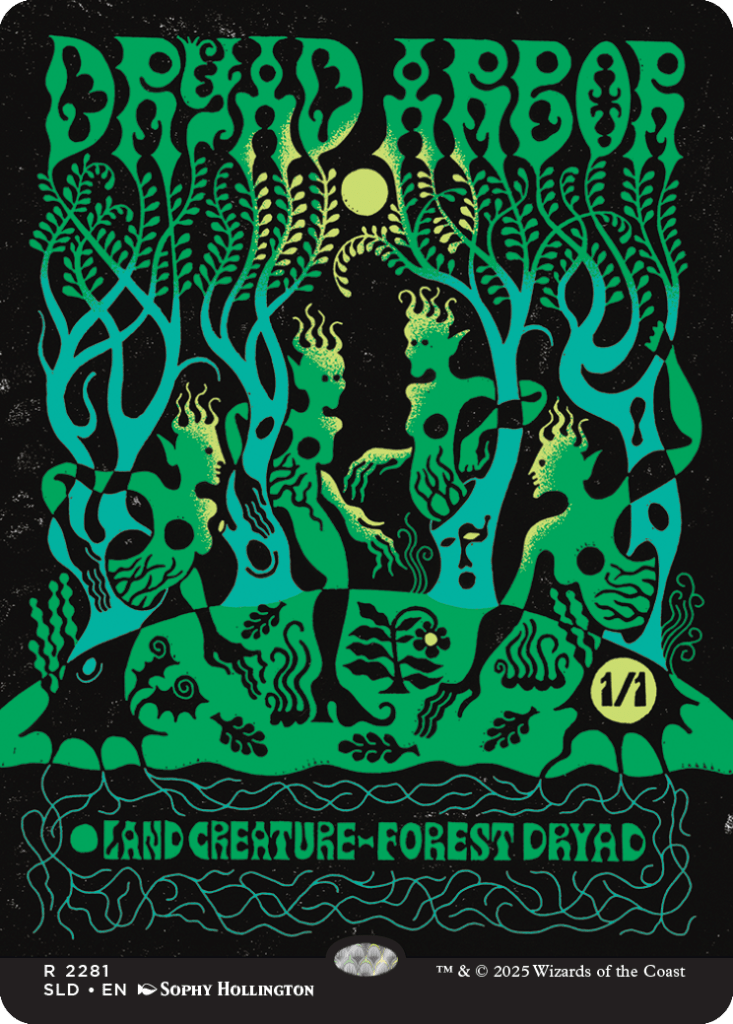
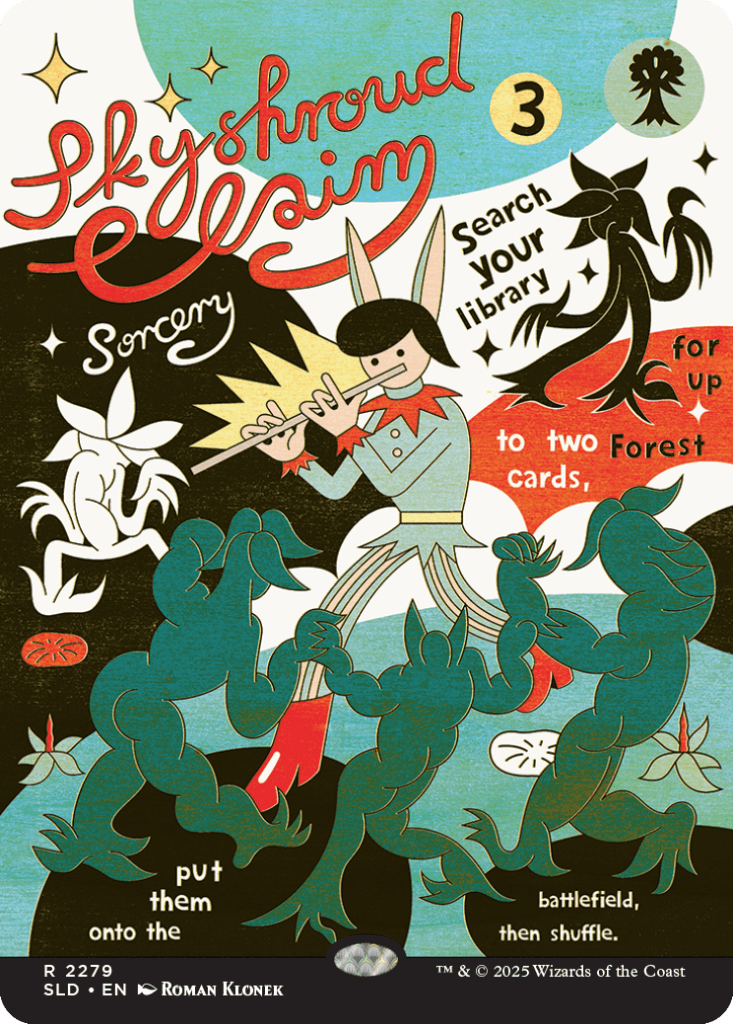
The cards in question, with art from Kathleen Neeley, Roman Klonek, Pedro Oyarbide, and Sophy Hollington, are:
- 1x Nature's Lore
- 1x Skyshroud Claim
- 1x Wood Elves
- 1x Dryad Arbor
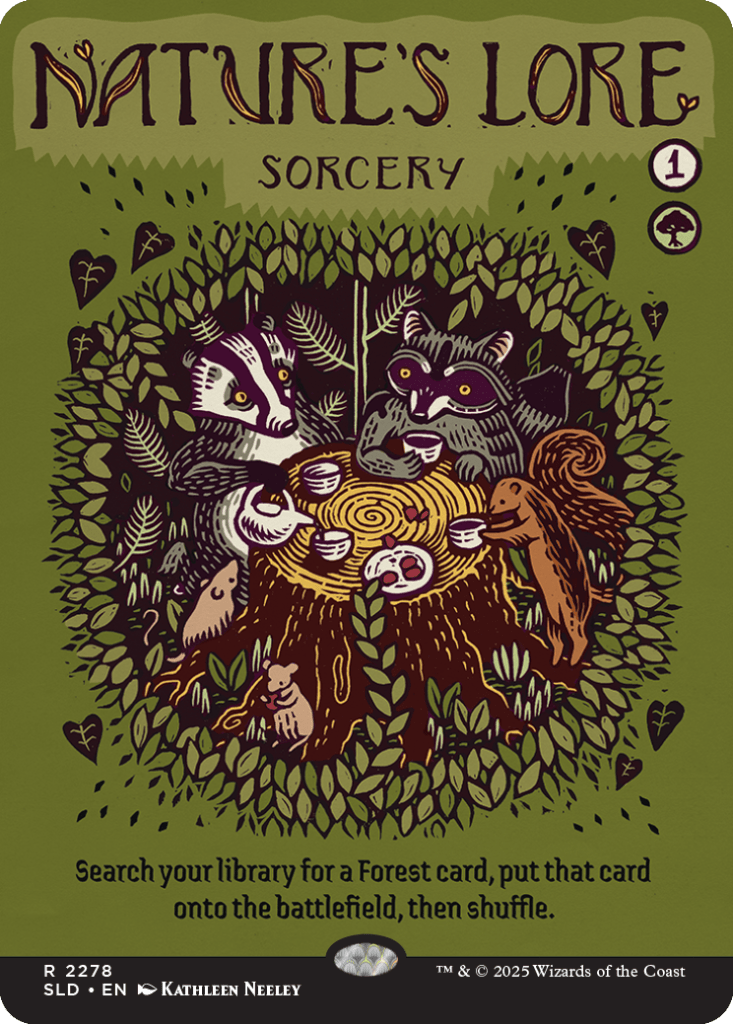
If you go by current market prices, that’s $5–$6 worth of near-mint cards. Whether these cards with new art are worth the price is a tough question to answer… above all because, instead of the usual “one non-foil price / one foil price,” Wizards posted five tiers for non-foil and five tiers for foil, with identical contents across all of them:
- Non-foil: $9.99 / $19.99 / $29.99 / $34.99 / $39.99
- Foil: $19.99 / $29.99 / $39.99 / $44.99 / $49.99
Why is WotC doing this?
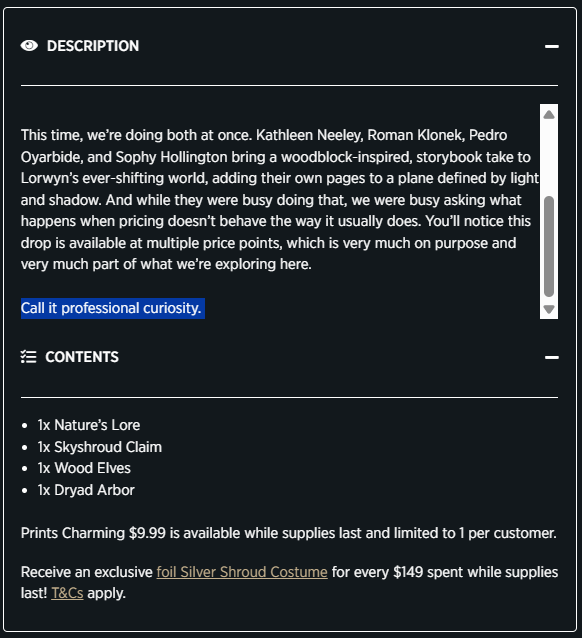
“Call it professional curiosity,” says the Secret Lair description, which also makes it very explicit that this is an experiment…
Source: Secret Lairs
… but Magic players are calling it a lot of other things.
It’s To Honeytrap the Scalpers’ Bots

Mindbreak Trap – Illustration by Christopher Moeller
The most benign interpretation is that this is a test to trap bots that buy everything as soon as a new Lair is out. As rule of thumb, if a Secret Lair has different items with different prices, the most expensive item has the most goodies; bots that aim for the premium stuff without reading the “Prints Charming” fine print would aim for the $40/$50 bundles without realizing the cheaper options were the same.
This theory gets some support for the fact that the lowest-priced option was the first to sell out (as you’d expect from rational buyers), but the second to sell out was the top tier.
“Which of you special geniuses bought the most expensive packs,” wondered u/HybridP365, “when the cheaper ones were still available and they all have the same cards?”
“I hope it’s just a bunch of bots/scalpers auto clicking,” says u/xFruitstealer in the most upvoted reply from that thread.
On the other hand, though, some hasty (human!) buyers made the mistake of going for the top-tier price simply because they were too much in a hurry to read the product description, and made the assumption that the pricier the better.
“The problem is that Secret Lair creates an environment where you have to act fast whenever you see something new on the site, because it could sell out at any moment,” notes u/WalnutSoap. “When there’s time pressure like this that’s baked into the experience, you can’t really be blamed for wanting to act fast and just get the best version (or what seems like the best version).”
Tier Pricing, Like Concert Tickets
The majority of Magic players seem to think that WotC’s profit motive may be a much better explanation than them trying to teach scalpers a lesson.
“Customers will try to get in on the lower prices. Each tier is limited in a set quantity. As it sells out people who missed out are forced to buy at higher prices if they are willing,” notes u/PlatnumxStatuS. “Literally tier pricing with concert tickets.”
With, of course, a second crucial difference: Concert tickets are really capped by the size of the concert venue; there’s a hard limit on how many fans a band can jam wherever they are playing. But WotC could (and used to…) print to demand as many cards as they wanted to.
If this were a true “pay what you want” model, it’d be straightforward: pick a price, pay it, get the thing.
But this isn’t that. Each price point had a dedicated inventory, meaning that the cheap option existed right up until it sold out, at which point your choices were to pay more or go away.
In short: Creating FOMO to nudge folks to spend.
And it looks surprising similar to dynamic pricing. Obviously everyone is willing to buy at the lowest but how far are you willing to go?
It’s a Survey With Extra Steps
By Wizards’ own admission, this is an experiment that they are very curious about. And it very much looks like they were wondering, “What if we sell identical things at different prices and see what happens?”
“Each price point still sells out, so it’s more of an experiment to see how much people are willing to pay for $6 (non-foil) worth of cards,” notes u/damnination333.
In other words: Wizards seems to be testing price elasticity, to see how much they can get away with charging players.
A Curious Ramp
Greed – Illustration by Izzy
Something that’s almost poetic about this “professional curiosity” is that all four cards are ramping; literallyabout getting more resources, as soon as possible. And, in Magic, curiosity effects are all about getting more cards in your hand whenever you hit your opponent in the face.
Interesting choice of themes for an experiment that seems all about finding out how much you can charge while offering the exact same product.
Follow Draftsim for awesome articles and set updates:









Add Comment