
Last updated on December 26, 2024
Say what you will about their ability to balance various constructed formats, but the past few years have shown that Wizards R&D know how to design a hell of a good draft format! 2018 and 2019 were home to some of the best draft formats of the decade and if Theros Beyond Death is an omen from the ghost of draft formats yet to come, 2020 will be no different.
Coming hot on the heels of Throne of Eldraine, a format that some consider one of the all-time greats, THB delivers a comparable experience. The format is tainted by a few notable blemishes but also graces us with deep gameplay, a wide range of viable archetypes, and multiple opportunities for players to demonstrate individual skill expression.
Since its release in January 2020, I’ve racked up about 60 MTG Online drafts. I’m excited to share everything I know about the format and, ultimately, the concepts I believe to be key to successful drafting, deck building, and gameplay.
Theros Beyond Death: The Big Picture
If a friend who had never drafted Theros Beyond Death came up to me and said, “My life depends on me 3-0ing an 8-person pod that starts in five minutes,” the three distilled pieces of advice I’d give them to succeed in THB are:
- Draft a deck where all cards contribute towards the same plan
- In-game, focus on long-term resource management
- Build and draft with maximizing your best/most important cards in mind
While it’s true that these points are good tips for basically every draft format there’s ever been, THB is home to cards, mechanics, and archetypes that exaggerate these points in ways that meaningfully change how you should draft and play. We’re going to come back to these and expand on them later but keep them in mind as we go over a few more big picture ideas first.
Speed of the Format
A question I like to ask as a quick litmus test to get a grasp on the speed of a format is: “would Divination be a good card in this format?”
This gives a rough idea of how much time you have to cast spells that don’t directly affect the board, and how important it is have access to additional resources past the top twelve-ish cards in your deck. Given that there are currently three Divination variants at common that I actively want in my deck most times, I would answer that question with a resounding “yes”!
I’d classify the format as medium speed leaning towards the slower side of the spectrum. If Amonkhet and Zendikar are 10/10s and M14 is a 1/10, I’d put Theros Beyond Death at a 5/10. For a more recent comparison, Throne of Eldraine is about a 7/10.
It’s important to note that 5/10 is just an average. Much like ELD, there’s a wide spectrum of decks that you should expect to face, ranging from trying to kill you on turn five with Wrap in Flames to grinding until turn 20 and eventually winning with Sweet Oblivion. Me telling you a format’s (mostly arbitrary) speed ranking out of 10 isn’t super helpful when drafting and deck building, though, so let’s clarify a bit.

This is a format where you still need a good curve—rarely is this untrue, even in the slowest formats—but it’s not one where you feel like the game is virtually over when your opponent plays a 2-drop and you don’t. Not many of the early creatures have built-in evasion or are hard to block, but you still want to be building a board presence early so that your opponent doesn’t run away with the game when they suit up their 2-drop creature with Impending Doom.
The format allows you to comfortably play good 6- and 7-drops, especially when so many of the expensive cards in the set such as Blight-Breath Catoblepas and Pheres-Band Brawler catch you up from behind. Don’t shy away from playing two or three copies of these cards, given the rest of your deck has a reasonable curve.
Aggro decks definitely exist, but they’re slightly less prevalent than they have been in recent sets as not all of the red and white color pairs lend themselves to aggro decks. I want to caveat this by saying that, even though aggro decks aren’t abundant, it doesn’t mean that the ones that do exist are bad. A good 16 land mono-white deck is going to be able to deliver the beats and RW in particular is one of the better decks in the format.
Something to consider when drafting and building is that the aggro decks in this format generally don’t operate on the “2-drop, 3-drop, 4-drop, combat trick kill you” axis all that often. Decks where that play pattern is the main game plan are rare, as aggro decks in THB will more often be trying to build up a board and anthem or Voltron up a single creature with a protection spell to back it up.
The Removal
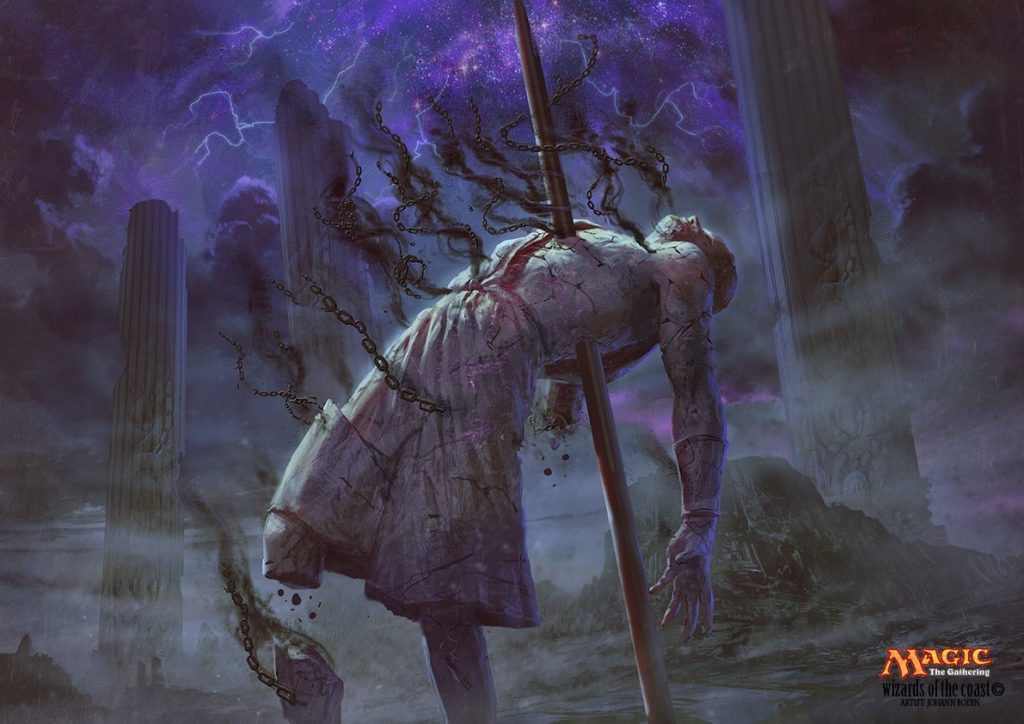
“Appropriate” is the best term that I can use to describe the common removal spells in THB. There’ve been formats in recent years where the removal was too clunky or expensive to be a priority during the draft—looking directly at you, Ixalan—as well as formats where the removal felt close to too good. War of the Spark comes to mind for the latter, but it gets a pass because uncommon Planeswalkers made good removal a necessity. I think Wizards R&D struck a good balance in THB.
The removal lines up well with the creatures, it kills the things you need it to kill (or exile) at each point along the curve, but it’s also not so efficient that it ever feels like a deck of 10 removal spells embarrasses a deck of 15 creatures. Aside from Mire's Grasp, the somewhat conditional Warbriar Blessing, and blue’s best “removal” spell Riptide Turtle, the common removal spells generally don’t trade up on mana against the majority of the creatures in your opponent’s deck.
All that being said, let’s talk Revoke Existence and Return to Nature.

These are both good cards, but not as insane as you might think they’d be in a format set on the plane of Theros. You’d want access to two of this effect by the end of the draft, but it’s not uncommon for these to live in the sideboard. How valuable these are to you varies greatly from matchup to matchup.
Against most UG decks, you’d be happy with four of ’em since a large percentage of their creatures are enchantments. Against RB, you’ll find these (especially Revoke Existence) stuck in your hand or being traded for an inconsequential target.
I’ll happily main deck the first Return to Nature, even the second if I have a slot, but I’m not as fond of Revoke Existence. Return has a few things going for it that Revoke doesn’t, the main one being its ability to snag an escape creature out of the opponent’s graveyard.
Revoke also has the unfortunate feature of being a white card. Most of my white decks in this format want all their cards to contribute to the “kill you dead” plan and can’t afford to have a conditional, reactive card stuck in their hand. Yes, it’s relatively easy to find a single target for the card, but it may not answer the permanent you need to answer and simply “finding a target” isn’t good enough most of the time.
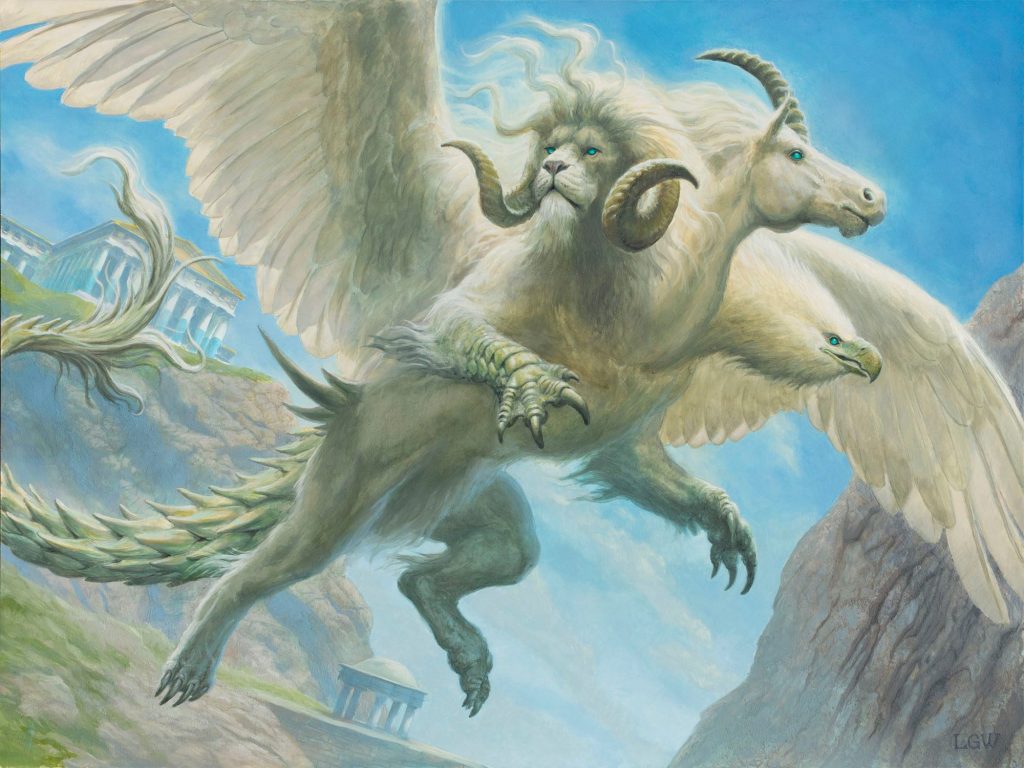
There are many formats where the best common creatures are higher picks than the best removal spells in a given color (think Fierce Witchstalker and Merfolk Secretkeeper in ELD), but THB isn’t one of them. The common creatures are good, but when compared to the removal spells in their respective colors, removals edge them out nearly across the board.
This is partially a function of how appropriately removal line up with creatures in the format, but it’s mostly because there are several must-answer threats in the format. Sometimes this must-answer threat manifests itself as a flier wearing a Commanding Presence and sometimes it’s a “kill me now or lose” bomb.
Speaking of which…
The Bombs
All right, here it is. The dark spot on what would otherwise be a nice, shiny apple of a draft format. Theros Beyond Death has a lot of bombs, but that’s not the main issue. If you run the numbers and compare how many A-level bombs are in THB with how many A-level bombs are in formats from the past few years, you’ll find that—while Theros may have slightly more than average—it would be close enough to not feel noticeably different on quantity alone.
The real issue lies behind the nature of these bombs. The bombs in THB fall into one of three equally unpleasant categories:
1. They say, “kill me this turn or virtually lose on the spot”:

2. They’re recursive or resilient so even if you have a removal spell, they keep coming back or can protect themselves:

3. They invalidate most of the game actions that had taken place previously:
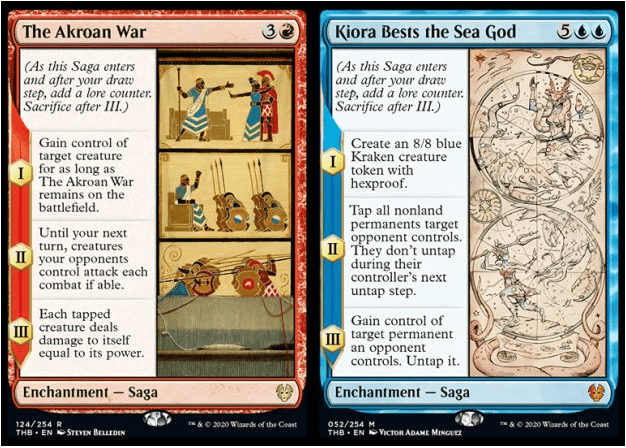
4. Or they’re Dream Trawler and have the distinct honor of falling under all three categories.
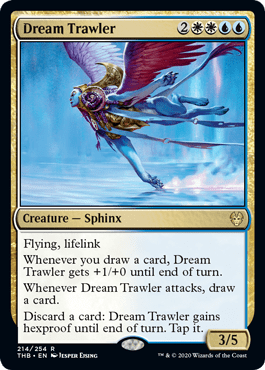
OK, I promise that’s all the complaining I’ll be doing about these cards. What’s important is what we decide to do with the knowledge that these cards exist in the format along with the effects they have on the draft and in-game play. More on this later when we return to our three big-picture pieces of advice, but to put it into a few words:
Since the top 20 cards in the set are so much better than the other 234, you’re highly incentivized to build around your good rares and should bias towards trying to play them over other cards.
To sum up what I’m trying to get at here:
- Staying close to a single color in pack one means that you can play the absurd bomb in another color that you’re lucky enough to open.
- Use your removal carefully. Consider the value of removing a 4/4 against not letting a Nightmare Shepherd stick.
- Understand which cards beat the top cards in the set, especially when you can pick them up at relatively low cost during the draft. Gift of Strength out of the board is a scrappy way to deal with Dream Trawler, and picking up a copy of Cling to Dust or Soul-Guide Lantern can send
our friendPolukranos, Unchained on a one-way trip to the underworld, for good.
Black is the Deepest Color… By a Lot

You know that moment in TV shows where the teacher is handing back tests to the class and goes “most of you did quite well on the test… except for one of you” and the main character flips their test over to see they were the one kid to get an F? That’s exactly how Fruit of Tizerus must feel because all of its classmates received a grade well above passing.
Black’s commons are exceptionally deep. The top seven common in the color are cards I’m actively looking to put in my deck, and you have to go down to about the 14th best before you get to a card that makes me go “eh, yeah I guess I’ll play this one”.
Not only is the color deep, but its top two commons—Mire's Grasp and Final Death—are the top two commons in the set. The next tier down, containing four to five cards, is still full of C+/B- level playables. As if that weren’t enough, black gets a bunch of absurd uncommons including the set’s mythic uncommon Pharika's Spawn. The cherry on top is that not one of black’s rares are bad and, in fact, most of them are at least B+ level cards.
Black being so deep and so powerful has a few implications on the draft. To start with, a table can support about four black drafters on average. One, maybe two of them may have black as their base color, a couple others may just be playing black for a bomb they opened or a few removal spells they picked up early in the pack.
Something to be aware of is that a large percentage of Pick 1 Pack 1s (P1P1) in this format will be a black because of how good black’s cards are, along with the sheer density of them. If a black rare is opened, it’s going to be drafted. If there’s a black uncommon in the pack, it’s likely one of the better cards to choose from. And if the rare is a dud and the uncommons are underwhelming, there’s still a good chance that there’s a Mire's Grasp or Final Death to pick up.
This isn’t inherently good or bad for your prospects of drafting black, it’s just info to be aware of and use to your advantage. If you open a Woe Strider, know that there’s a good chance that the person passing to you also first picked a black card. If by some miracle, black seems to be open in your seat, then great! Congrats, you’re getting hooked up in the best and deepest color.
If you aren’t as lucky, you can maneuver your seat one of two ways: either hold on to that Woe Strider for dear life and cut all of the black you see in pack one while hoping to get rewarded in pack two; or read the most open color in your seat and understand that Woe Strider will either make your deck along with a couple other black cards or you have to abandon it all together.
The secondary implications of this is how highly you should be valuing single-pipped black cards against double-pipped ones. Final Death and Drag to the Underworld are two similar cards, but (for me) Final Death is the clear pick. This is largely because exiling is critical against Escape creatures. But even if it read “Destroy target creature” it would still be a more flexible P1P1.
I’m not one to argue that double-pipped cards are that much less flexible than single-pipped ones, as you can generally adjust your mana base to play the cards you need to play. However, you often get pushed out of black hard enough that your final deck often ends up with six Swamps, and Drag to the Underworld just isn’t castable in an acceptable amount of the time in those decks.
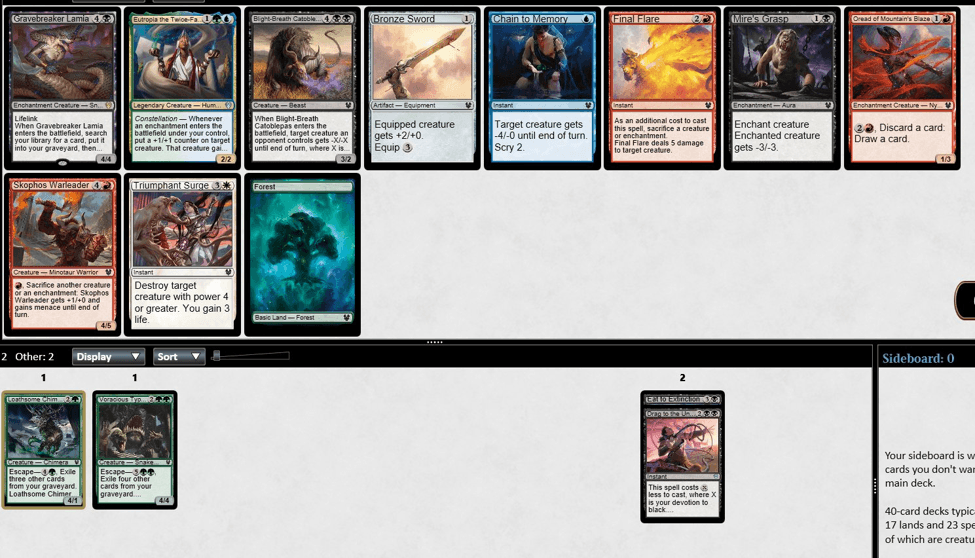
When one color is so much better than the other four, it does strange things to the metagame. Drafting black on MTGO was so competitive following the release of Limited Resources’ podcast on drafting the best color in Theros Beyond Death (spoiler: it’s black) that you would have been lucky to get 40% percent of your deck composed of good black cards. A few days later, when people realized this was happening, a percentage of them (myself included) tried to hard-avoid black and stuff like this happened:
It’s hard to use this information to gain a tangible advantage, as the Limited meta can shift at any time. Just know that if you see a fifth pick Gravebreaker Lamia, the people at your table aren’t idiots. The person who opened the pack may have picked a Warbriar Blessing because they didn’t want to fight over black. And thanks to Twitter, I know that’s exactly what happened here:
The Mechanics
Escape
Escape is the headliner mechanic of Theros Beyond Death. If you haven’t played with escape cards yet, it’s hard to fully grasp how powerful they are. I think the first time many players read an escape card they thought of it as “flashback but for creatures”. While there are clear comparisons to flashback, escape cards not exiling themselves is a game-warping difference.
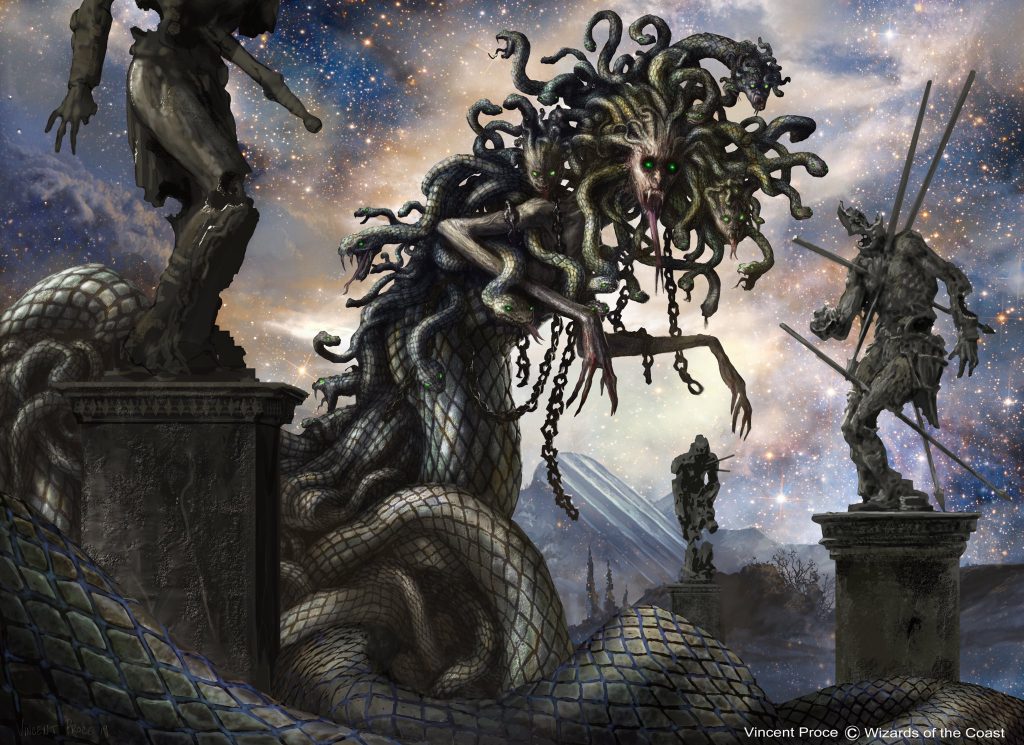
The existence of escape has a few implications for drafting and gameplay:
1. When you have escape cards in your deck, self-mill becomes virtual card advantage
Not only do you have the chance to mill your escape cards, effectively drawing them, but every three to four cards that go to your graveyard count as a virtual card. Most of the common escape cards require you to exile three cards to pay their escape cost.
The first chapter of Binding of the Titans milling three cards means that chapter alone has earned you a rebuy of your Loathsome Chimera. In decks with a critical mass of escape cards, Venomous Hierophant effectively reads “3/3 Deathtouch, draw a card”.
If you want to learn more about the concept of virtual card advantage, be sure to check out PVDDR’s course.
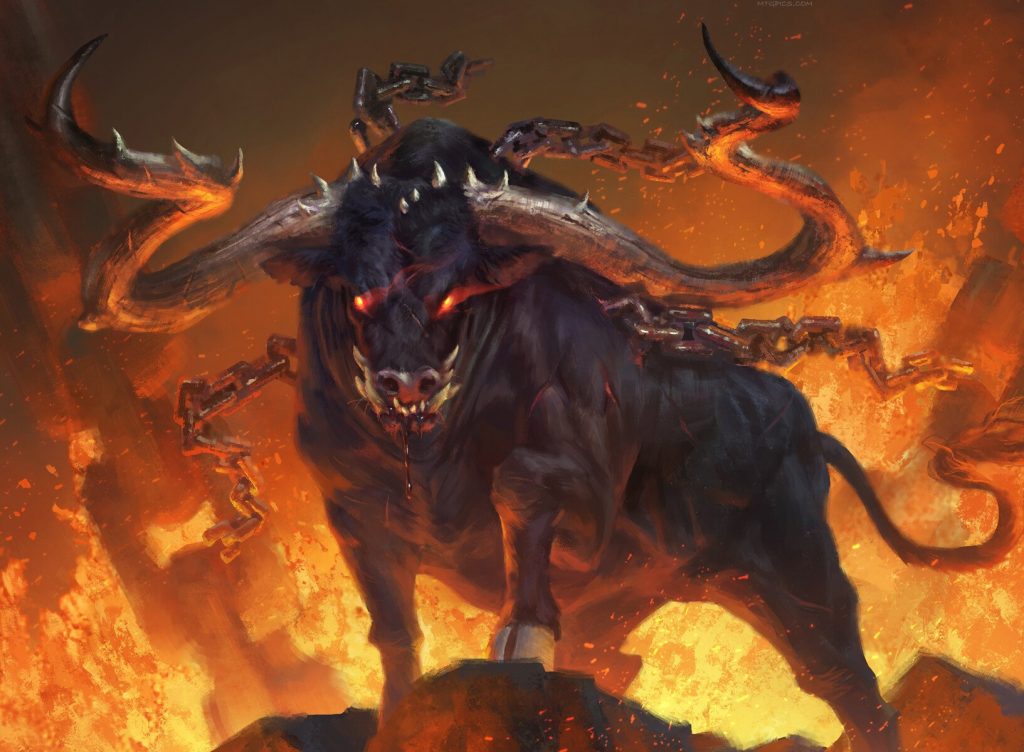
2. Escape changes how you think about card economy and the value of a card
In most formats, when you cast a removal spell on your opponent’s creature, you’ve 1 for 1’ed for all intents and purposes. Both of you are both down a card and some amount of mana has been spent on both sides. In THB, that exchange is closer to a 1.3 for 1.3.
If we go back to the idea that three cards in your graveyard means one Escape activation, then each player putting a card in the graveyard means both are approximately a third of the way closer to their next escape. If you have escape cards in your deck, anytime you can exile your opponent’s card instead of sending it to the grave—using Final Death or Agonizing Remorse, for example—you’re up a percentage of a card in that exchange.
One of the broader implications of this is that control decks that are relying on a suite of non-exiling removal spells to stave off aggression are disadvantaged in many matchups because, at a certain point, they’re slowly gifting their opponent value. One of the reasons why Riptide Turtle is so important to blue control decks is that it effectively removes a ground attacker without giving it a chance to escape in the future.
3. Escape means you sometimes want to put more than 40 cards in your deck
There comes a point when drafting some of your black (and sometimes green) decks that you have so much self-mill, good escape payoffs, and the set-up to survive until turn 15, that the only resource you lack is the raw pieces of cardboard needed to bring back your escape cards. Given all the time and cards in the world, escape can grind out virtually any other deck as they’re a source of renewable card advantage only limited by the number of cards in your library.
I will caution that for it to be the right move to play more than 40 cards, you first need to check a few boxes:
- You have enough self-mill that you’ll reliably deck yourself over the course of an average game. If you don’t think this is the case, then that extra 10 cards you put in your deck may as well not be there.
- You have six or more escape creatures. You don’t want to be stuck in a spot where you’ve submitted a 50-card deck, but your opponent has three copies of Final Death to pick off your measly three escape cards.
- You don’t have any A-level cards in your deck. If you’ve got a card like Setessan Champion or Ashiok, Nightmare Muse in your deck, you’re better off just playing 40 cards to maximize your chances of drawing your busted plays.
If all these things are true, then go wild! Revel in the fact that you can say you played more than 40 cards and it was the best thing to do.
Constellation
The Constellation mechanic lives in this weird space where most of its payoffs are on lackluster or mediocre cards.

But then a small percentage of cards (generally the rares) with Constellation are absolutely absurd.
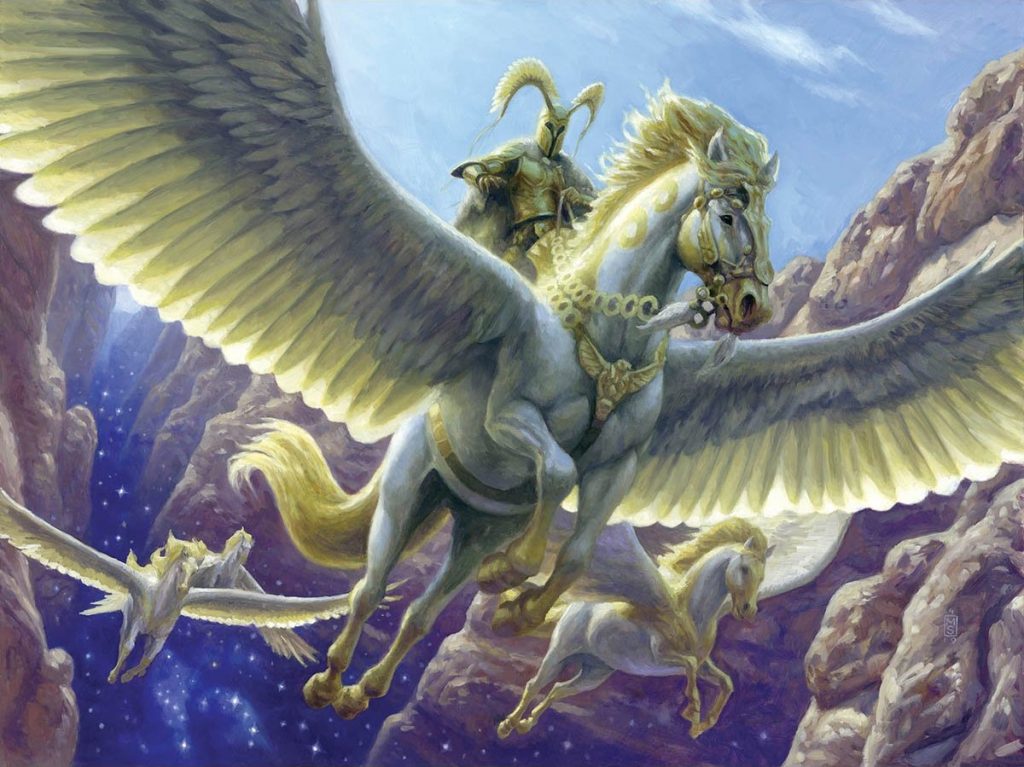
In practice, this means that constellation only subtly affects how you draft or build most of the time. You don’t have to make any large concessions to them mainly because most of the constellation payoffs aren’t powerful enough to meaningfully affect your pick orders. In decks that have mid-tier constellation payoffs like Pious Wayfarer or Nexus Warden, you generally end up with enough enchantments to incidentally trigger them just by virtue of how many naturally end up in Theros decks.
You may pick your first Transcendent Envoy over your first Leonin of the Lost Pride if you started the draft with a couple copies of Pious Wayfarer, but that pick is close anyways and largely contextual based on the rest of your draft. When you do happen to have a Setessan Champion-level card in your pile, you can make more aggressive concessions to it like valuing Setessan Training and Starlit Mantle much more.
The most important in-game idea to consider about constellation is the importance of sequencing. The patterns of optimally sequencing cards will vary greatly from card to card and game to game. Try to think about how your turns are going to play out a few turn cycles ahead when your opening hand contains two or more constellation cards.
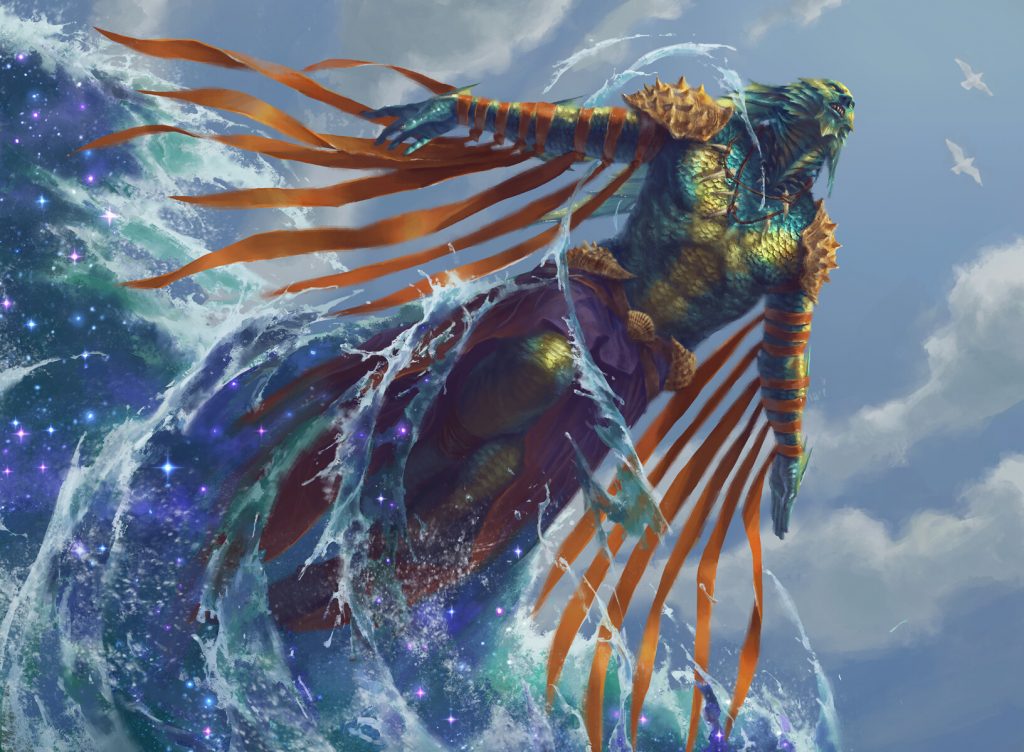
When you’ve got a top-tier constellation card, consider holding them until you can double spell in a single turn. This way you make sure you get at least one trigger out of them since the triggers on the best-of-the-best constellation cards are generally worth a full card. Not only will you be up on the exchange if your opponent has a removal spell for your creature, but if you wait until the dust has settled before your cast your Eutropia the Twice-Favored or Archon of Sun's Grace and they go unanswered, the game will almost definitely end in short order.
Devotion
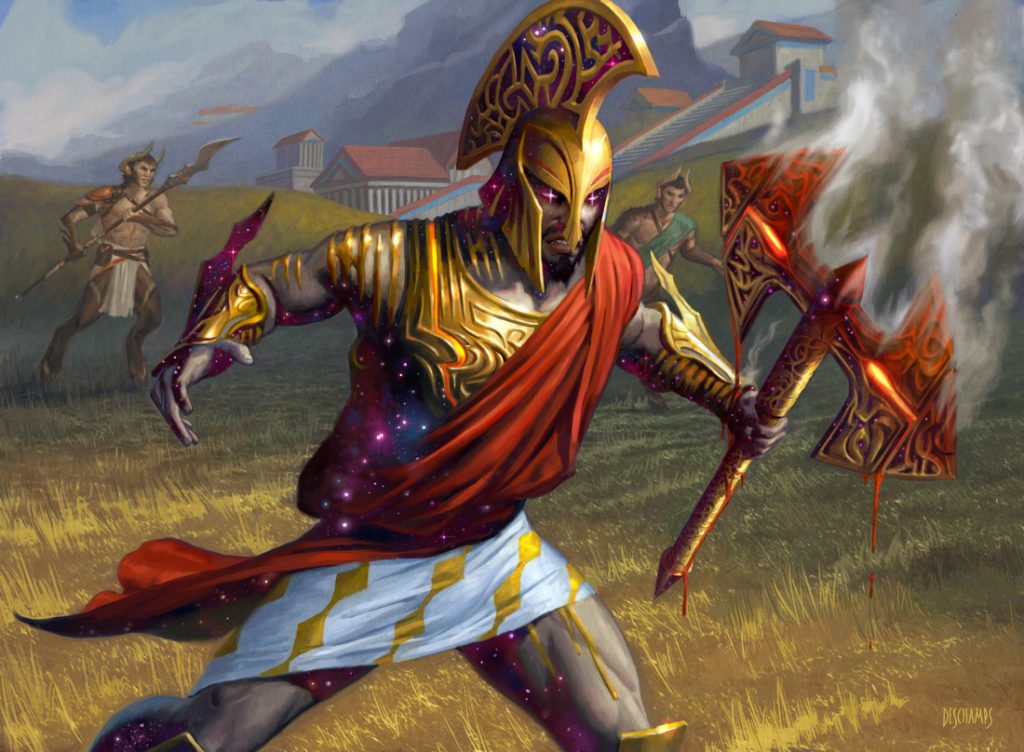
If you played during the original Theros, you’ll remember that devotion was a large part of that Limited format. The same can’t be said for Beyond Death. Here, it feels more like an afterthought sprinkled on a few cards as a small callback to the OG set.
Aside from the gods, the only two cards that may affect how you draft and build are Blight-Breath Catoblepas and Daybreak Chimera. The rest of them—Gray Merchant of Asphodel and the cycle of demigods spring to mind—are all fine on their own and don’t need much help to be good cards.
You generally feel OK casting Blight-Breath Catoblepas with no other black pips on the battlefield, but you want to be sure that your deck has enough black cards to pick off a 3+ toughness creature with some amount of consistency.
Daybreak Chimera, on the other hand, really wants you to play with a ton of white cards. If I find myself often casting this card for five mana, I don’t really want it in my deck. But, if I’ve got some white 1-drops or just a density of white cards, I’m excited about the potential for this Chimera to come down as early as turn three or to be able to double spell with it on a later turn.
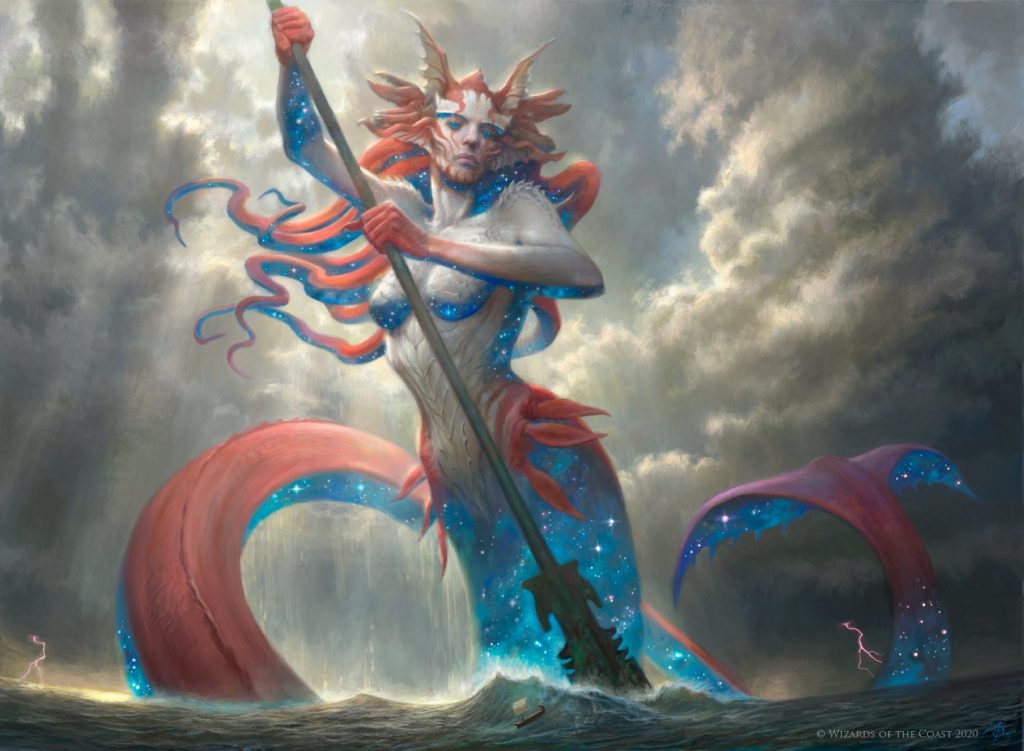
Like constellation, consider your sequencing when you have devotion cards in your deck to ensure that you get the most value out of them. Think about the implications of trading your Nyxborn Marauder on turn four when you have a few Blight-Breath Catoblepas lurking in your library.
Back to That Drafting-for-Their-Life Friend we Mentioned
Great news! Our friend from earlier has informed us that they now have 20 minutes to talk about the most important THB drafting points. Let’s revisit those for a second:
- Draft a deck where all your cards contribute towards the same plan
- In-game, focus on long-term resource management
- Build and draft with maximizing your best/most important cards in mind
Now that we’ve touched on the fundamentals of the format, I want to dive deeper into these three points and contextualize them a bit.
Draft a deck where all your cards contribute towards the same plan
This sentiment is something that has been true for the past half-decade of Limited Magic, but it feels like its importance is amplified thanks to the continued hyper-focusing of archetypes with each set that comes out.
I think Sam Black put it best in this article:
“There was a time when sets were less synergistic and when there were fewer playable cards in the packs. When many of the cards are bad, there’s a lot less room to build a deck with a coherent strategy, and when that’s the case, you’re more likely to just want as many “strong Limited cards” as possible.”
Building a deck from commons and uncommons in Theros is all about building towards a synergistic plan and applying context to your pick orders. The value of most of the commons in this format varies greatly depending on what deck they’re in.

Underworld Rage-Hound is a premier 2-drop in the RB deck because you have access to an abundance of removal to force it through and there’s enough attrition pieces to be able to escape it multiple times a game. Conversely, in RW go-wide decks, it’s nearly unplayable. Your main plan is to build up a board and then eventually cast an anthem effect, so you generally don’t want to be trading your 2-drop early. With fewer cards trading off, you have less graveyard fodder to escape your Rage-Hound and it often sits in your grave until the late game.
If you go down the list of commons and uncommon in the set, you’ll find that—outside of the removal spells—most of the cards only truly belong in about two color pairs. Even a top common like Voracious Typhon is contextual, as your GW decks generally end up with too many white sources to reliably play it on curve and want to execute a game plan that isn’t conducive to casting 7-drops.
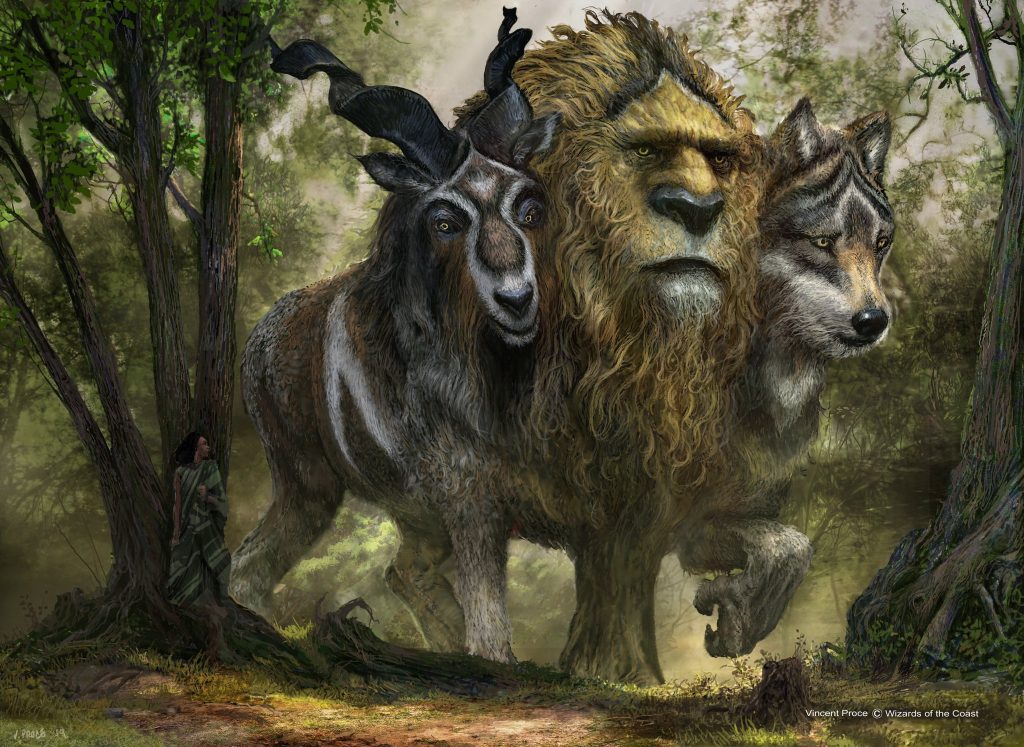
I’m also unhappy if a low synergy card like Hyrax Tower Scout ends up in my deck, even though it’s a reasonable card in a vacuum. The more cards you have that don’t contribute to your deck’s game-plan the more diluted your deck becomes, and the more likely you are to lose to a deck that’s more synergistic or just straight-up more powerful than yours.
In the draft, ask yourself “does this pick add to the plan of my deck?”. If it doesn’t, does it make up for that by being an objectively powerful archetype-agnostic card? If the answer to both of these questions is no, consider taking a rider on a card that branches into the plan of a color-adjacent archetype.
If you’re GW by the end of pack one and the best cards you see in your colors in the second pack are Captivating Unicorn and Ilysian Caryatid, a card that you generally don’t want in your GW beatdown decks, consider taking Hateful Eidolon as a powerful card that synergizes with the white auras in your pile.
In-game, focus on long-term resource management
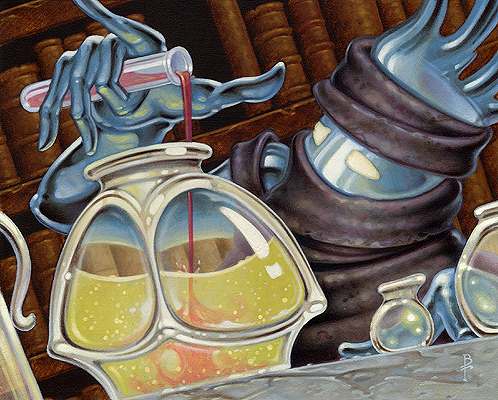
Any matchup containing blue, black, or green cards on both sides of the table has the potential—I’d go as far as to say the likelihood—to go to turn 12+. This means that the important interactions in these matchups aren’t so much what happens in combat turn-to-turn, but whose Voracious Typhon is able to come back the most times or who sets up a kill before the opponent wins with Thassa's Oracle on turn 25.
If long-term planning and understanding how matchups are likely to play out over the course of a long game are a weak spot for you, Theros Beyond Death is the time to hone these skills. LSV made a comment on a recent episode of Limited Resources that some games of this format are a return to old school Limited, where you have two exile-based removal spells and you have to save them for your opponent’s Pharika's Spawn and Phoenix of Ash or they’ll crush you with them. In certain matchups, you should expect to see 75% percent of your opponent’s deck, so plan accordingly.
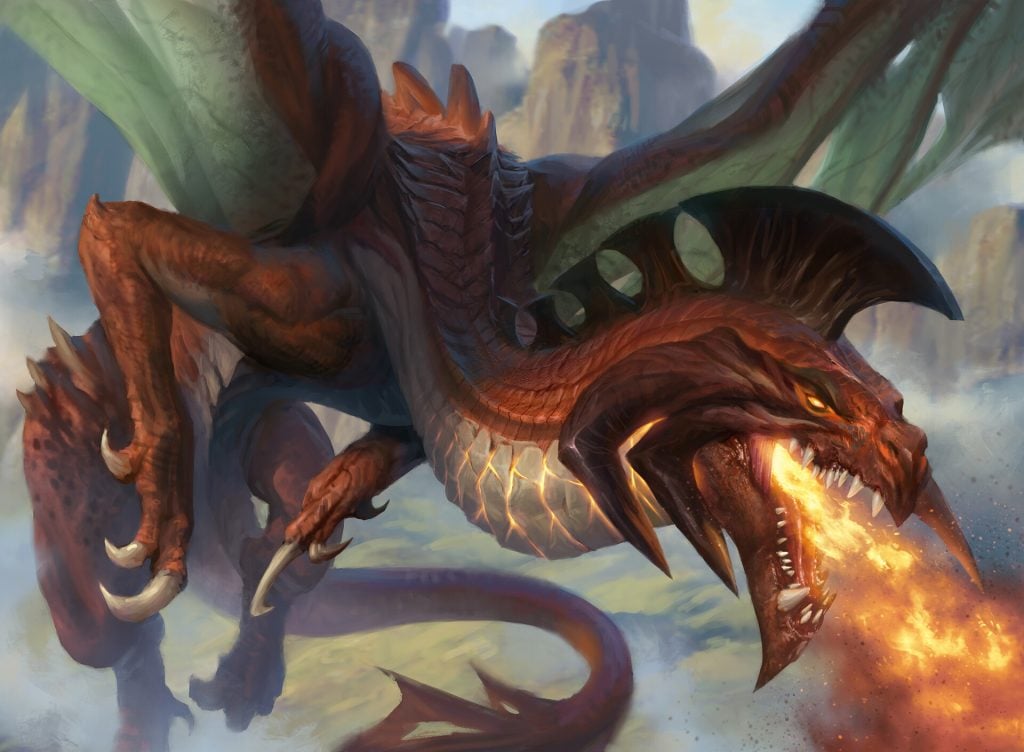
We can further explore where the resource management piece comes in by jumping back to our conversation about the implications and effects that the escape mechanic has on the format. Your graveyard and your opponent’s graveyard are additional resources that you don’t have to consider in most formats. For each exchange of cards you make, you need to consider how that affects when and how your opponent brings back their next escape creature.
In many games, you don’t want to make slightly favorable onboard trades if your opponent has access to escape cards and you don’t. Instead, plan for winning through that one flier in your deck or setting up a kill over the course of two combat steps.
Even in RW, what I would consider to be the most aggressive deck in the format, you often have to start thinking about turns 9+ because the game may just last that long if you don’t win in the first six turns. Maybe you switch roles and play defense, attempting to mitigate bad trades with your opponent’s escape creatures and hoping to win with a flier five turns later.
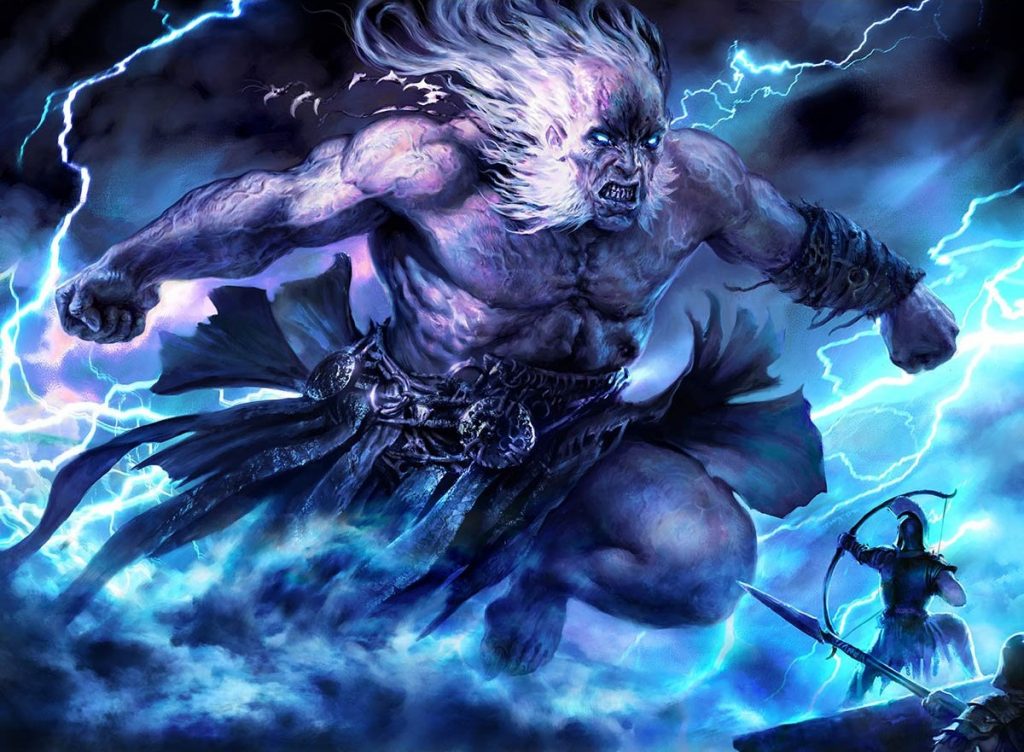
I want to stress long-term resource management is something that comes up in a percentage of games—around 50% if I had to put a number to it—but it isn’t solely what the format is about. Many times, you just play a typical game of Limited and your opponent dies before they can ever escape their 7-mana card. If you aren’t a white aggro deck planning to end the game quickly, the best thing to do is build a typical Limited deck with a non-intrusive plan for the very late game.
Usually this just means picking up four or five escape creatures during the draft, but it can also mean trying to go over the top of decks trying to escape five times a game with something like Sweet Oblivion or force mass trading with Klothys's Design. If your plan is to succeed over the course of the format, it’s important to understand how to maneuver through 20-turn games and also recognize when you’ve got good attacks in the early game so you have the opportunity to end it much earlier than that.
Build and draft with maximizing your best/most important cards in mind
The top 20 or so cards in THB are so much better than the other 234 that, if you’re lucky enough to open or get passed them, you should do everything in your power to play them. For reference, here are the first few cards I have on that list in rough order from most to least powerful:

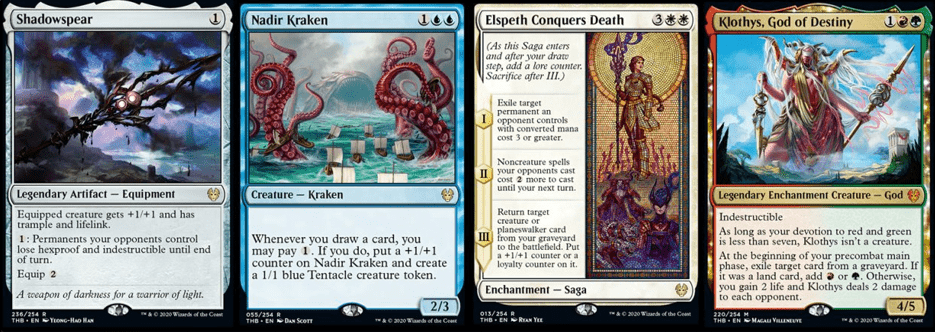

That only scratches the surface of the great cards in this set. I’m very much not an advocate for forcing in draft, however I am a firm believer that the nature of the bombs in this format are such that you should do everything in your power to be able to play them.
I’m loath to admit a format is truly a prince format, but I think I’ve come to the realization that for me, THB just edges into that category. Again, it’s not so much because the bombs are that much better than the other cards—they are—though that’s not entirely the case. The main factor for me is that the decks without a few good rares feel markedly worse than the decks with them, and one of the best ways to build your deck is to maximize on your best cards.
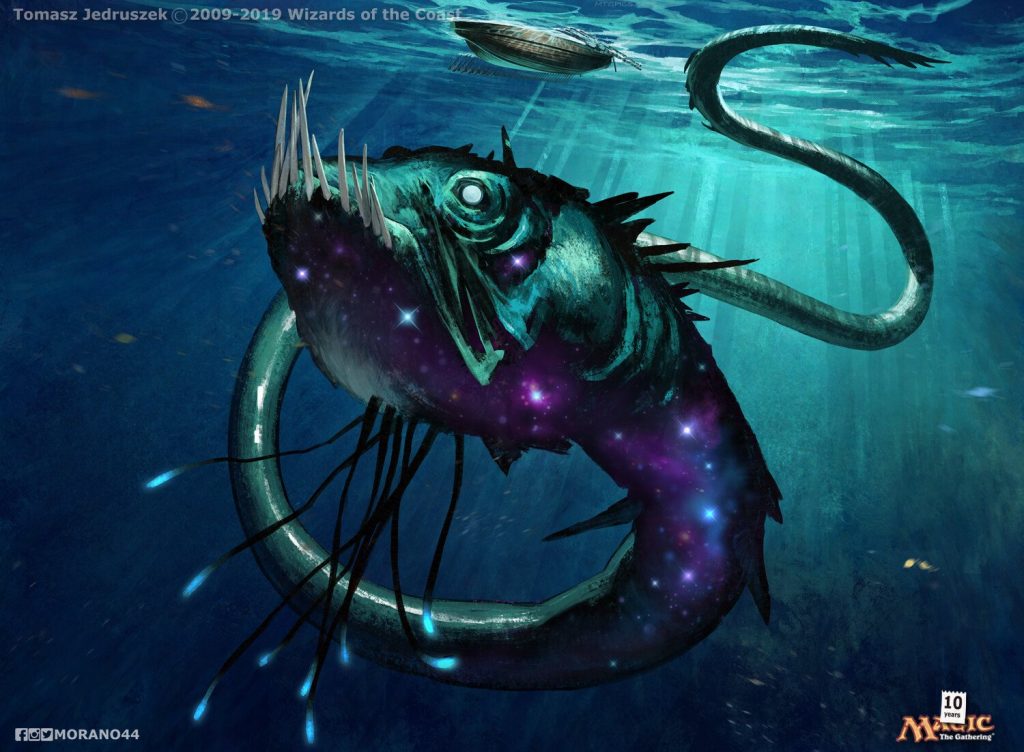
In this format, I’m building around my rares more often than in most others because they’re the best cards in my pool by a large margin. Similar to how LSV advocated soft forcing if you open a great card in War of the Spark, a stance he later dialed back on, in Theros it feels like this is often the best thing to do.
As a piece of anecdotal evidence, MTGO user Oppa’s (once the trophy leader by a wide margin) trophy decks often fit this “build around your best cards at all costs” philosophy, making extensive use of Traveler's Amulet (Draftsim article on that card here) and card filtering.
By the way, you can often find decks like his retweeted by limiteddecks.

When you do have an S-tier level bomb in your pile, there are two main ways to build your deck that maximize on its power:
The first is simply including ways to see it during more of your games. One of the reasons that many players have Omen of the Sea as the top blue common is just how deep it digs. Cards like Medomai's Prophecy and Thirst for Meaning do a good job of digging as well.
If you aren’t a blue deck, picking up an abundance of cards that self-mill allows you to see your S-tier escape cards more often.

The second way to maximize your rares is including cards that you might not otherwise include in your deck. We touched on this when talking about the constellation mechanic, but be aware of certain combos like Elspeth Conquers Death paired with either Archon of Falling Stars or Lagonna-Band Storyteller, or try biasing towards green to maximize on stats for your Shadowspear.
The Archetypes
Here’s a quick and dirty list of my rankings for each archetype in the format before we go in-depth:
| Tier 1 | Tier 2 | Tier 3 |
| BG UB RW BR | UR BW RG UW UG | GW |
Tiers are sort of a nebulous concept, especially when talking about Limited where decks can vary so much from draft to draft, but these are based on both the ceiling of the deck and how often a good version of the deck comes together.
I want to stress that this set is balanced as far as archetypes go and I think every deck—even GW—is competitive when it comes together. The gap between each tier is small and I don’t think it should generally affect your pick orders unless you want to use archetype tiers as a tiebreaker.
Golgari Escape Midrange

What the deck is trying to do
This is the escape deck. Green-black is your classic Limited midrange, with the twist that it values dumping cards in its graveyard with Relentless Pursuit and Funeral Rites to allow you to escape multiple times a game.
This is the deck where you’re most likely to play more than 40 cards. Green-black is one of the best examples of a good midrange deck we’ve seen in Limited in a while. It’s good at gumming up the ground and stopping early aggression but can also out-grind many of the blue control decks in the format.
How to get into this deck
Check out our sample draft.
As boring as it sounds, generally you’re just taking good black or green cards and then moving in. So, many of the black and green commons are conducive to this strategy and you naturally end up in a synergistic deck a lot of the time.
Cards that are better/may be able to wheel in this archetype
Chainweb Aracnir is a card that isn’t great unless you can bypass it being on the battlefield. Binding of the Titans is a draw-two with a bit of card selection in this deck.
Why the deck is in tier 1
The deck is easy to get into, can support multiple drafters at a table, can be built with only commons, and has an absurdly high ceiling if you open or get passed the good rare or uncommons. Aside from blue-red which can often out-tempo this deck and win in the air, I don’t consider it to have any markedly bad matchups and it’s favored against decks who lean hard into aggression or late game control. It sometimes struggles with mirrors, as you may get paired against a deck that’s going slightly bigger than you.
Dimir Control

What the deck is trying to do
This your classic blue-black control deck. You want the game to go as long possible by playing cheap blockers and removing hard to block threats. The base blue versions of this deck tend play almost exclusively at instant speed and highly value Riptide Turtle and Deny the Divine.
This deck has some problems winning the game sometimes, though. You really want a good rare or mythic to get the job done but if you don’t pick up one of those, a single copy of Sweet Oblivion can get you there.
How to get into this deck
Check out our sample draft.
My most common way to get into this deck is picking up a few of the good black removal spells early as they’re likely to get cut, and then grabbing the blue cards coming my way after. You get to play a base blue deck with the early removal spells you picked up supplementing your counter spells and early blockers.
Cards that are better/may be able to wheel in this archetype
Riptide Turtle is the truth in this deck—and by the truth I mean close to integral to its success. The card looks underwhelming but being able to “remove” escape creatures in a sense without sending them to the graveyard is big game. Deny the Divine is a card I want four of if I have enough things to do at instant speed, but Memory Drain does the trick in a pinch.
Why the deck is in tier 1
Like green-black, it can mostly be built from just commons and uncommons. The deck can answer close to anything, though it needs Deny the Divine or exile-based removal for matchups with escape cards. It also uses lots of commons like Riptide Turtle that other decks don’t want.
Boros Heroic
What the deck is trying to do
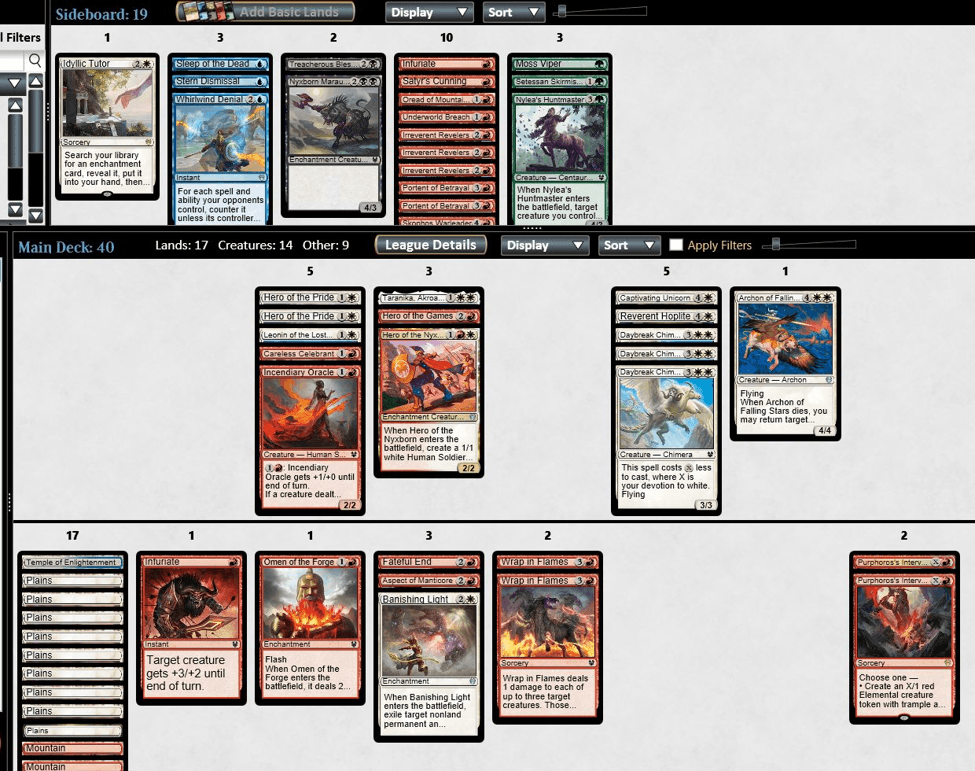
Red-white heroic is trying to go wide with creatures or token makers, deal some early damage, and then finish off the game by casting a spell or two that targets one of the deck’s many “hero” cards. I’d classify this deck as the most aggressive deck in the format. RW? What a surprise!
How to get into this deck
Check out our sample draft.
When I’m drafting white aggressive decks in this format, I generally start off close to mono-white and then try to pick up a secondary color after seeing what’s open. Often, I’ll be passed Hero of the Nyxborn which prompts me to move in and want to take all the heroic creatures slightly higher.
Cards that are better/may be able to wheel in this archetype
Wrap in Flames is one of the best cards in a good version of this deck. So often, the game ends when you cast the card targeting one of your heroes and two of your opponent’s blockers. My red-white decks generally want two to three copies of Wrap if I have more than five heroes. Reverent Hoplite isn’t a card you can usually wheel, but it’s great in this deck. Sentinel's Eyes is already a good card in the white decks but is even better here as it’s a way to repeatedly target your heroes.
Why the deck is in tier 1
In a format where a less-than-modest percentage of decks are casting Divination variants on turn three and planning for what’s going to happen on turn 10, RW has a good matchup against a lot of what you’ll see in the format. It struggles a bit against green-black if it doesn’t have a tight enough curve out, but even then, Wrap in Flames can easily break through a board where the opponent has just stabilized. A common thread of these tier 1 decks is that a good version of them exists at Common, and RW is no different.
Rakdos Attrition
What the deck is trying to do
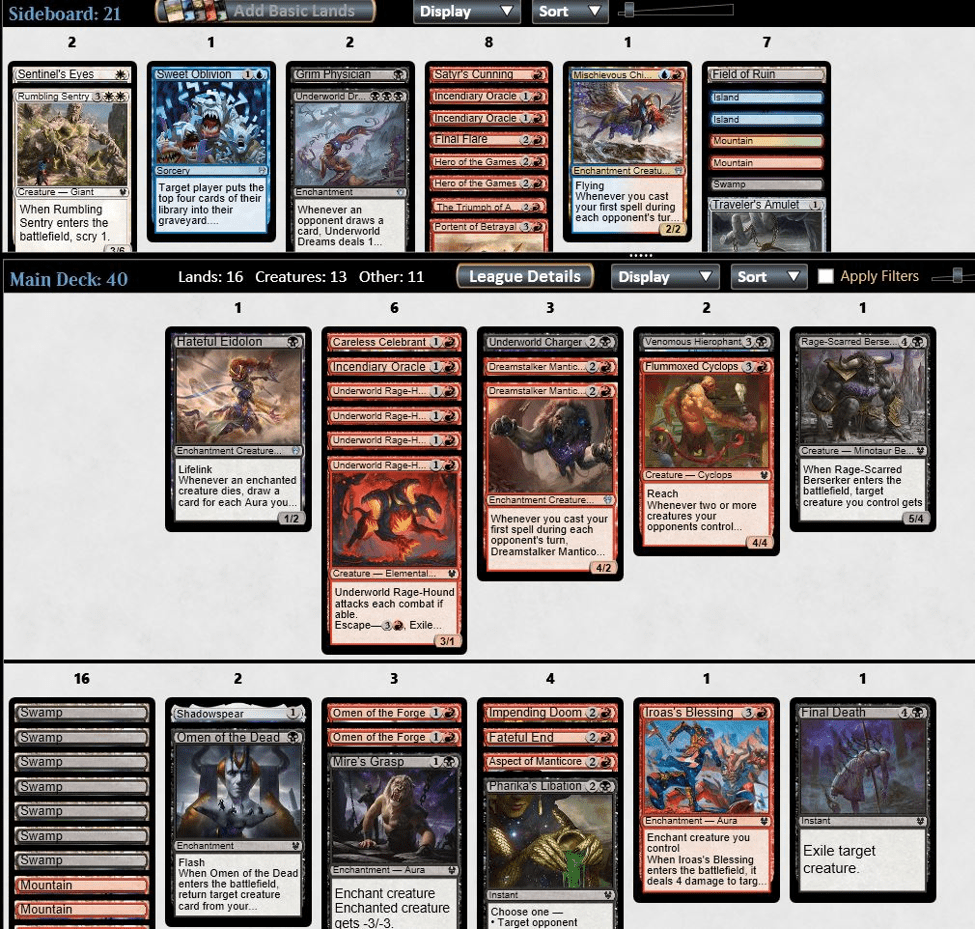
Red-black is one of my favorite archetypes in a lot of formats because it can beat down and punish an already-stumbling opponent while also can grinding into the late game, and that’s exactly what this iteration of RB does. You can force through your good 2-drops like Underworld Rage-Hound using cheap removal, or just let them trade off and use them as fodder for your escape cards later.
This deck has a mild sacrifice theme but its not very pronounced most times. If you end up with enough cheap sacrifice outlets, you may run a few copies of Portent of Betrayal. It’s often superfluous with the number of removal spells you have access to in the color pair, though.
How to get into this deck
Check out our sample draft.
A lot of time, you wind up in this deck just by picking up a collection of good red and black cards. Depending on the cards you’re passed, you can lean hard or not at all into the sacrifice theme. The deck can also end up more aggressive if you draft a lower curve, so understand the direction you’re leaning as you draft.
Cards that are better/may be able to wheel in this archetype
You definitely want some version of Portent of Betrayal in this deck. Final Flare is a card you’ll happily play two copies of, especially if you have a few omens lying around. Discordant Piper isn’t really a great card, but if there’s a home for it anywhere, it’d be in this deck.
Why the deck is in tier 1
Once again, the deck is easily draft-able with just commons, and your average RB deck is reasonably powerful. When I play red-black, I never feel like there’s a matchup that I don’t at least have a fighting chance against. I’d describe the deck’s matchups to be similar to Jund in Modern when Jund was good. You never feel like a dog, but you also never feel like you’re a shoo-in when you see what your opponent is playing.
Izzet Delver
What the deck is trying to do
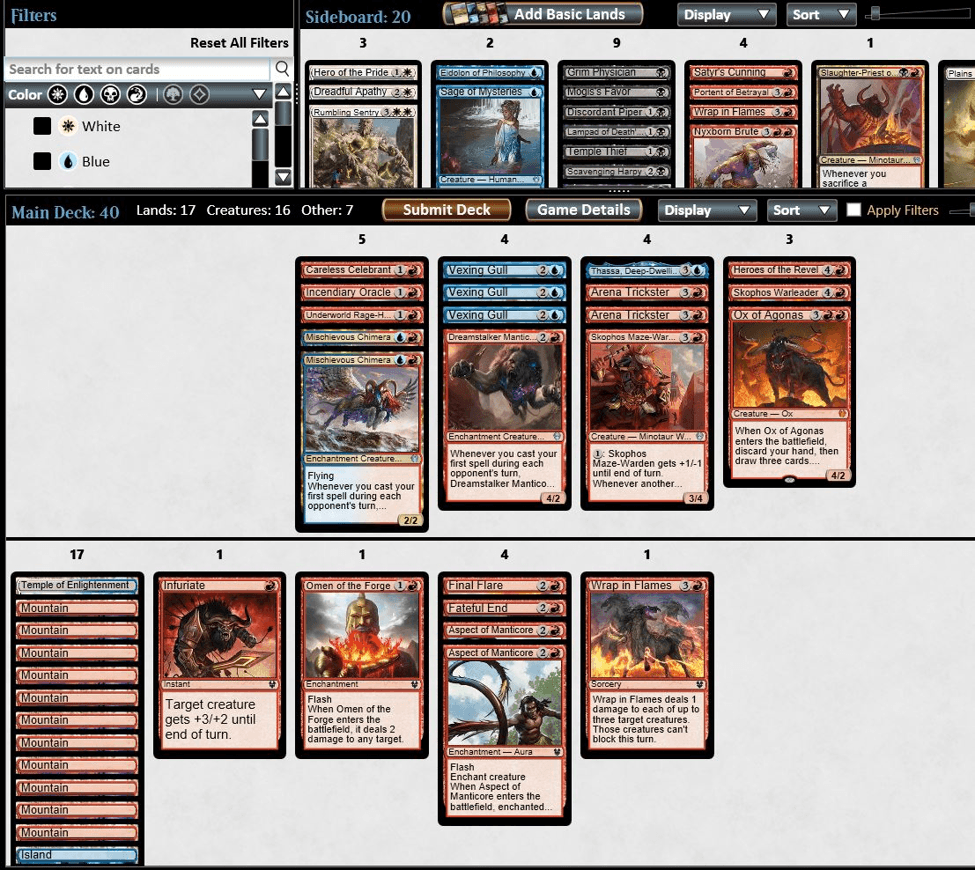
Blue-red is trying to stick an evasive threat and back it up with tempo plays and cheap removal. The deck plays out similarly to Delver decks in Legacy: once it lands a threat, it’s unlikely to tap out often. Your best Delver-like threat is Mischievous Chimera, but Vexing Gull does a decent impression as well.
How to get into this deck
Check out our sample draft.
Aside from generally good blue and red cards, Mischievous Chimera is the reason to be in the deck. It provides a nice amount of card selection and a reasonably fast clock.
Cards that are better/may be able to wheel in this archetype
Vexing Gull and Stern Dismissal are cards this deck will happily play multiple copies of that many of the other blue decks in the format don’t generally want.
Why the deck is in tier 2
When this deck comes together, it feels like a tier 1 deck. But when the best versions of it rely on the table opening a specific uncommon and said uncommon also making its way to you, you’re in a spot where this deck’s not going to be present at every 8-person pod.
Orzhov
What the deck is trying to do
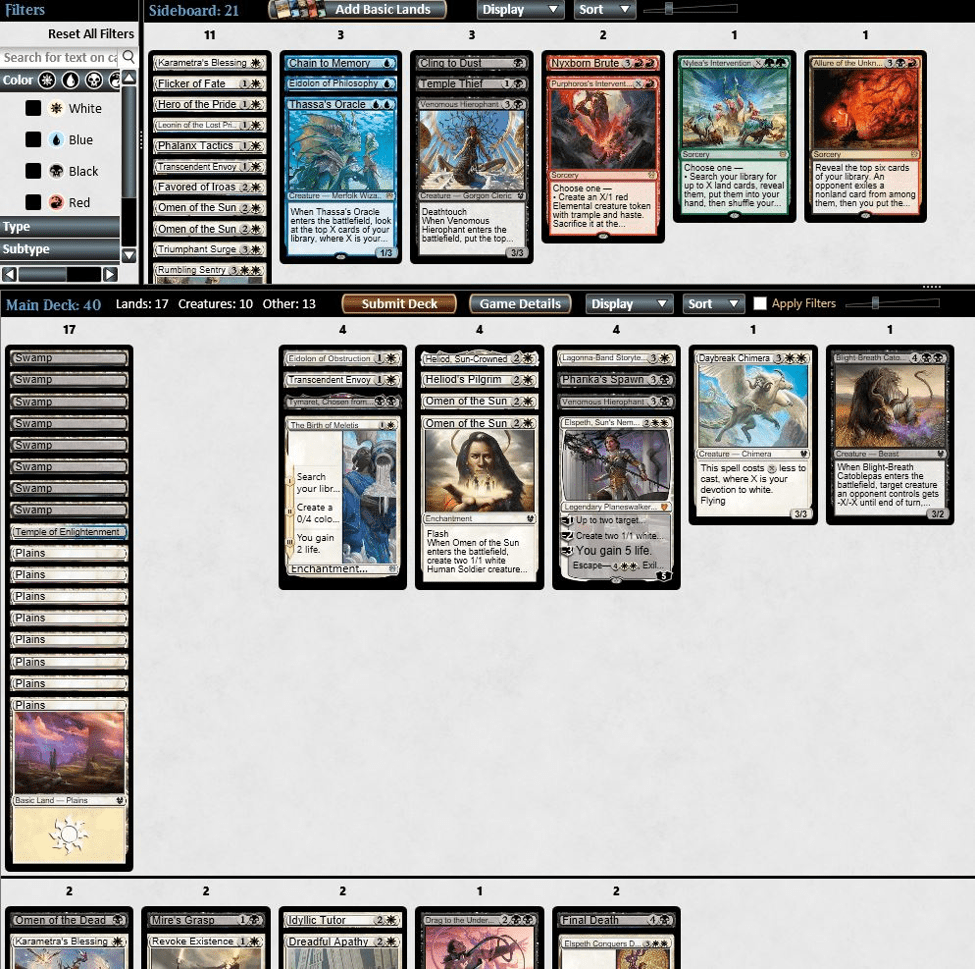
White-black is a deck that’s sort of hard to pin. It’s sort of like red-black in the sense that it’s just good cards of the deck’s color with some minor subthemes. It can lean more aggressive if you’re base white or more controlling if you’re base black, and sometimes has an aura subtheme if you pick up uncommons like Hateful Eidolon and Rise to Glory.
The most synergistic thing other than auras that you can do in WB is to draft a few combos. Omen of the Dead plus Lagonna-Band Storyteller means you can never deck. Omen of the Dead paired with Archon of Falling Stars lets you infinitely recur the flying cow. And Archon of Falling Stars matched up with Minion's Return plus Lampad of Death's Vigil is life drain equal to the amount of mana you have.
How to get into this deck
Check out our sample draft.
Out of all the archetypes in the format, this is the most “I just picked up good color1 and color2 cards”. A mid-pack Rise to Glory will push me towards the deck but not so much that I’m locking it in until I know both colors are open.
Cards that are better/may be able to wheel in this archetype
Hateful Eidolon excels in this deck and can draw you a ton of cards in tandem with Mogis's Favor. Dawn Evangel goes from “generally worse than Nyxborn Courser” to a decent value engine.
Why the deck is in tier 2
I have this deck in tier 2 simply because it lacks identity. It’s good, and just like RB I always feel like I have a puncher’s chance, but it’s not something I’m actively looking to draft unless the stars align.
Gruul Beatdown

What the deck is trying to do
This is one of the more aggressive decks in the format because it basically goes “here is a very large creature, I hope you can’t block it” starting early in the game. This is classic red-green beatdown with under-costed beaters and combat tricks to force your creatures through after the inevitable double blocks your opponent is going to have to make.
There is sometimes a “4-power matters” theme, but that’s mostly incidental. Your creatures are generally just large and sometimes you’ll have cards that reward you for them being, well, large.
How to get into this deck
Check out our sample draft.
A mid-pack Warden of the Chain or an early Nessian Hornbeetle often prompts me to bias my picks towards RG. Both cards are fine on their own and are two of the only cards that make me lean hard into the 4-power matters theme.
Cards that are better/may be able to wheel in this archetype
Ilysian Caryatid is at it’s best in this deck. There are some real explosive starts you can have when you play a 4-powered 3-drop on curve or play a 4-mana card on turn three and have six mana on turn four. Nylea's Forerunner is a card I want a copy of in my RG decks because your creatures really appreciate trample. Setessan Training works here as well.
Why the deck is in tier 2
When this deck does its thing and curves out it feels almost busted, but one bounce or cheap removal spell often feels like the game is over. The deck has issues against counter spell-heavy blue decks since it’s very much “one spell a turn”. It’s quite good against white aggro decks since it brick-walls their creatures at every point on the curve, though.
Azorius Dream Trawler/Staggering Insight
What the deck is trying to do
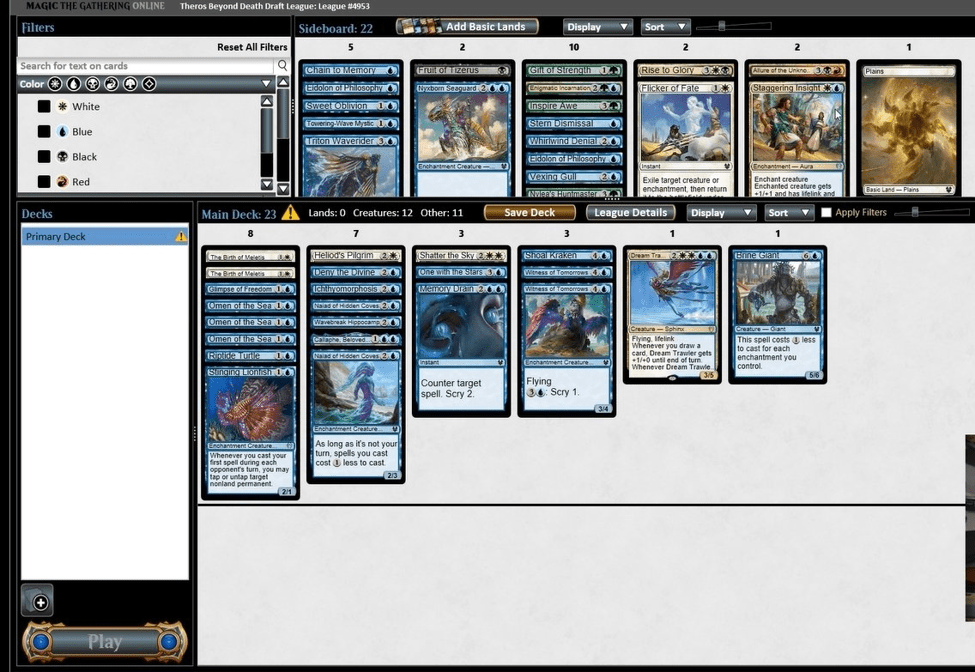
I have UW as two different decks: the ones with Dream Trawler and the ones without. The ones with it general have one goal in mind and that’s “survive until you get Dream Trawler and then cast it”. Dream Trawlers only want one thing, am I right?
Drafters who aren’t so lucky as to open the card are resigned to playing as a classic UW fliers deck. Staggering Insight is a powerful card that leads you to playing a protect-the-queen style game with Karametra's Blessing and Starlit Mantle to protect your staggeringly insightful creature.
How to get into this deck
Check out our sample draft.
The Dream Trawler variant: Open or get passed Dream Trawler and don’t move off it unless blue and white are both near impossible to draft in your seat.
The Staggering Insight variant: Again, this deck’s namesake card is what pulls me in. If I’m base blue or white with no clear direction, I’ll pick up an Insight and move in.
Cards that are better/may be able to wheel in this archetype
In the Dream Trawler variants, you’ll play a deck of entirely defensive cards like Nyxborn Seaguard and Rumbling Sentry as your Trawler is all you need to win the game most times.
Karametra's Blessing and Starlit Mantle are cards you want in the Staggering Insight version of the deck.
Why the deck is in tier 2
I might have this deck too low. Both versions are great when you get them, but both are reliant on opening or getting passed specific cards and I’m wary to put a deck like that in tier 1.
Simic Constellation/Simic Splish-Splash
What the deck is trying to do
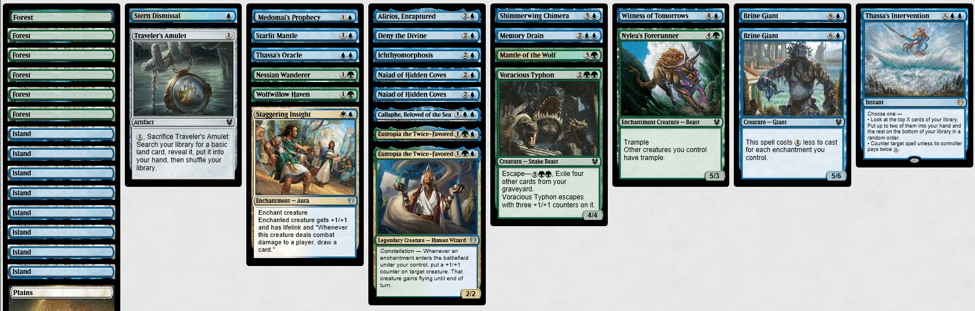
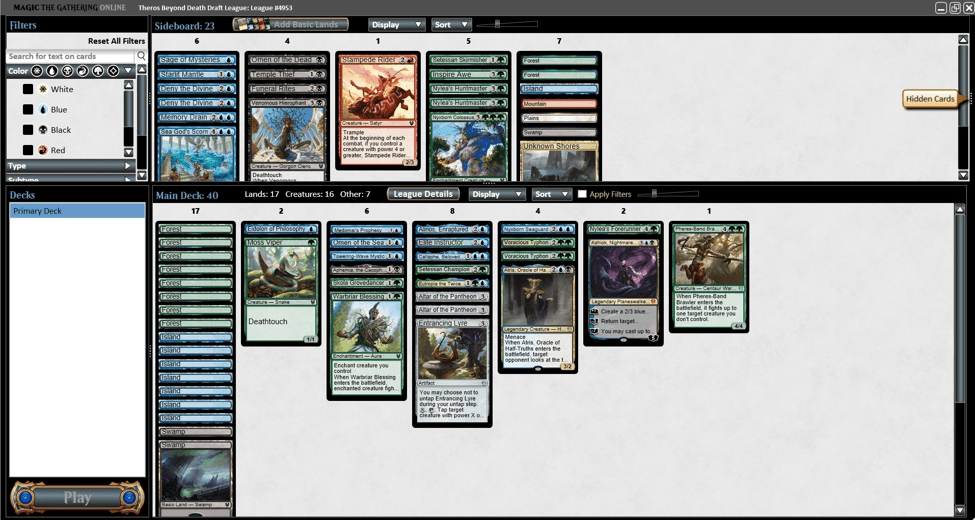
Again, I have this deck split into two separate options: ones that have a Constellation theme, and ones that are trying to play multiple colors.
The Constellation variant is fairly aggressive, planning to beatdown with large creatures and send them flying with Eutropia the Twice-Favored. As I mentioned when talking about constellation as a mechanic, most of the payoffs are weak so you generally aren’t relying on them to be the core of your deck. Instead, you’re just playing generally good green and blue cards. This variant of the deck doesn’t really want counter spells like many of the blue decks in this format do because it’s generally tapping out each turn.
The second variant of this deck looks to use blue and green as a base for a three- or four-color deck by splashing powerful cards. It’s doesn’t have a strong identity and is generally just trying to jam as much power as it can into its 40-card deck.
How to get into this deck
Check out our sample draft.
Eutropia the Twice-Favored is the headliner here and the main reason to find yourself in the Constellation beatdown version of the deck.
Cards that are better/may be able to wheel in this archetype
Any cheap enchantment goes up in value here. The more times you can trigger constellation the better.
Why the deck is in tier 2
Both variants of the deck require specific uncommons to work, and even when you get two copies of Eutropia, it doesn’t by any means feel like it’s unbeatable.
Selesnya Auras
What the deck is trying to do
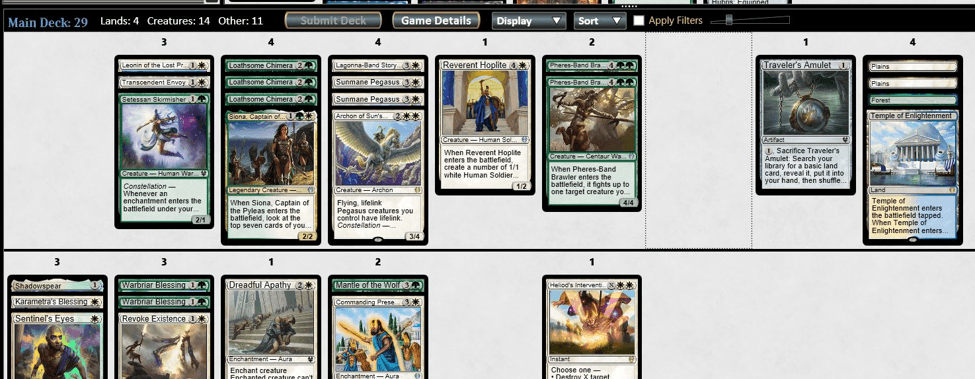
This one is straight-forward: play some cheap creatures, put some Auras on them, and beatdown while you protect them with Karametra's Blessing.
How to get into this deck
Check out our sample draft.
I’d recommend not getting into this deck unless you have strong incentives from both green and white. The deck isn’t bad, but it’s easy enough to bias yourself into a color pair that has a bit more going for it.
Cards that are better/may be able to wheel in this archetype
Setessan Training and Sentinel's Eyes are both cards that this deck appreciates that you can try to wheel.
Why the deck is in tier 3
It both requires somewhat niche cards and isn’t all that impressive when it does come together. I haven’t found that this deck ever feels like more than the sum of its parts. As a final dagger to it, its signpost uncommon Siona, Captain of the Pyleas is aggressively medium and is, at times, just plain worse than Heliod's Pilgrim.
The One True Build-Around
Theros Beyond Death is unlike most sets in the past few years in that there aren’t really any niche decks based on build-around cards. There’s no “catch em’ alls” à la Seven Dwarves and there aren’t any build-around uncommons like Dovin's Acuity, either.
The one true build-around in the format exists at Rare in the form of Enigmatic Incarnation.
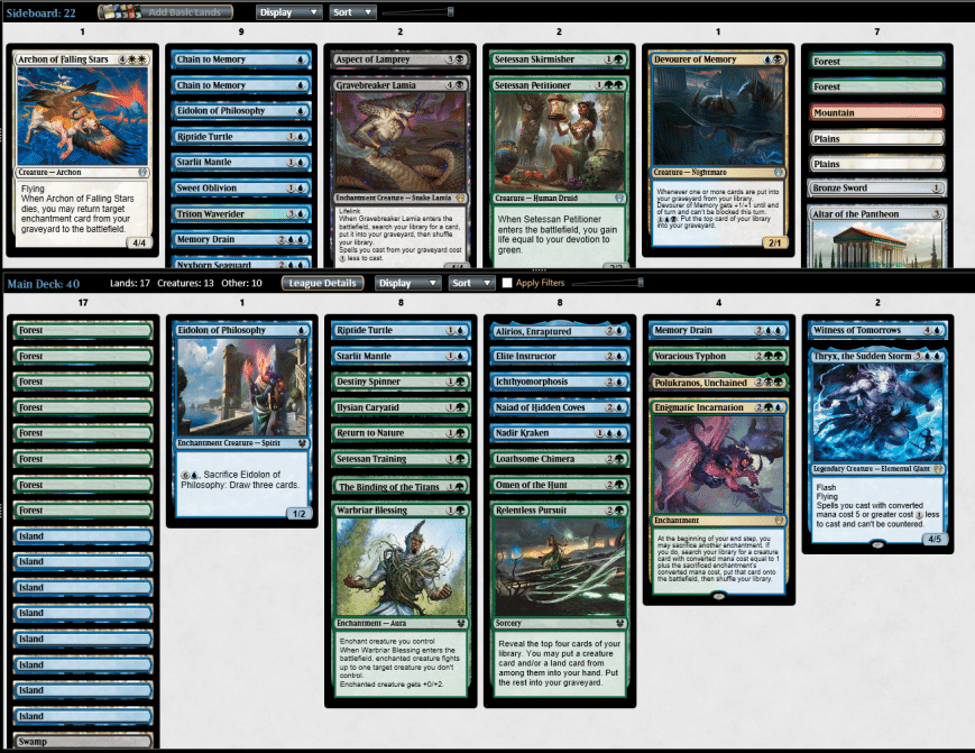
This deck wants to convert cards like Omen of the Hunt and Omen of the Sea into creatures, and ideally have a chain of creatures along the curve that you can sacrifice to find bigger ones as the game goes on.
The card is powerful, but the deck requires a bit of deck building finesse to make work. It’s worth taking early if you’re in either of its colors, but don’t feel dead set on playing it if you don’t pick up the pieces by the end of the draft.
Five Color Monstrosities
THB also has quite a few tools to splash at common, and any format with adequate fixing has the potential to be home to five color decks.

As the format progresses, I’ve been seeing more of these decks trophy and make it to the finals of drafts in MTGO. Proceed with caution if you choose to draft these, though. They’re clearly powerful but they require a certain knowledge of the format to succeed as well as decent mana base building skills.
The Best and Worst Cards of the Set
Now that we’ve talked about some of the deck archetypes in this format, let’s go a little further and take a look at some noteworthy cards. The commons and uncommons that we’ve got in Theros are something special, and they can often make or break your deck depending on how you draft. There are also cards that seem not-that-great but have a helpfully bright light at the end of the tunnel, as well as some cards that are the opposite.
Top Commons
White
1. Dreadful Apathy

This is the poster child for “it does it all”. It triggers constellation, it exiles creatures, it’s cheap removal… There’s not much here to be upset about!
2. Heliod’s Pilgrim
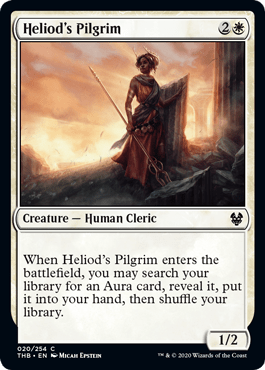
No matter what color combination you end up in, this card has the potential to grab a removal spell. Couple that with the fact that it can tutor up your nastiest pair of pants if you’re looking to push damage and you have a card that is not only powerful, but flexible as well.
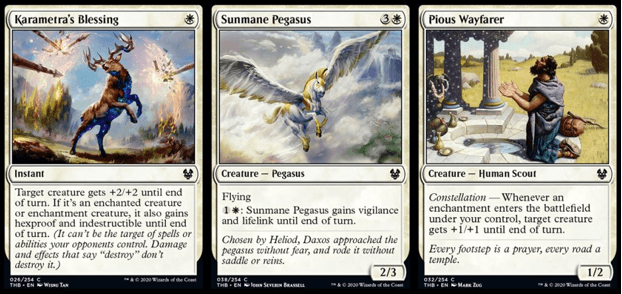
3. It’s a Tie!

These are both too contextual for me to definitively say “this one is better than the other” in either direction. In decks with more than 10 plains, you generally want Daybreak Chimera. But in decks that don’t (and sometimes ones that do if you have a strong heroic theme), you want the hero.
Honorable Mentions
Blue
1. Omen of the Sea
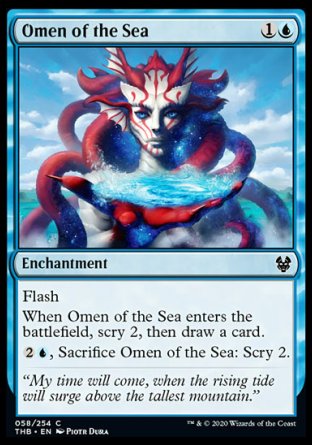
Blue’s commons are highly contextual, but after playing the format a bunch, Omen of the Sea is the clear frontrunner. Aside from being an inherently powerful effect, every blue archetype wants multiple copies of this card, which can’t be said for any of the other blue commons.
2. The rest of the good commons

Again, it’s hard to rank these ones as their value changes dramatically depending on what archetype you end up in. Thirst for Meaning is the most generally powerful card here, but you don’t need to load up on it if you have enough omens. UB will kill to get three copies of Riptide Turtle but doesn’t care for Vexing Gull while the opposite is true for UR.
Black
1. Mire’s Grasp
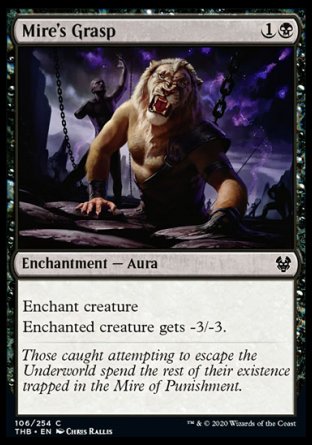
This is the best common in the set. I know there’s some debate between this and Final Death for that spot, but I stand firmly in my belief that Mire's Grasp edges its competitor out by a fair margin. It may not exile, but you can’t beat its rate and how well it interacts with the other cards in the set.
2. Final Death
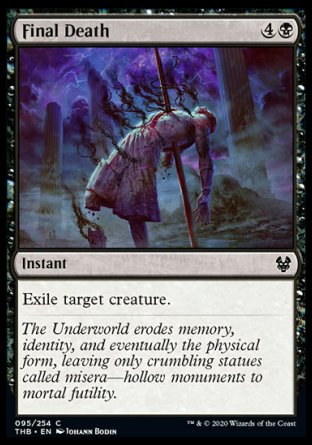
And now we get to the second-best common in the set. In many sets, a 5-mana removal spell would be begrudgingly playable, but the combination of this format being slightly slower than most and exiling being a huge boon means that this is a high pick, even over the majority of uncommons.
3. It’s a Tie!

Both cards usually generate a card’s worth of value with the Bleepus giving you the value upfront and the Gorgon giving you the fodder to cast an escape from the grave. I generally like taking my first Hierophant over my first Catoblepas just because it’s cheaper, but they are very close in power.
Red
1. Iroas’s Blessing
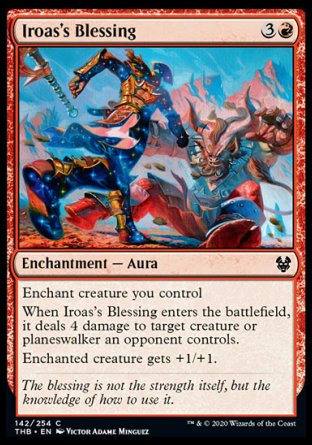
This card is a beating. When the red player curves 2-drop, 3-drop into this, the game feels like it’s over a lot of the time.
2. It’s a Tie!

Both of these are pretty good, but some decks want one more than the other. Rage-Hound has diminishing returns even though it’s the slightly better card in a vacuum while the RW deck much prefers Incendiary Oracle.
3. Omen of the Forge

A distant fourth, most red decks will play at least one copy of this card. Some will play multiples if they’ve got a copy of Final Flare lying around as well, but it suffers from diminishing returns.
Green
1. Warbriar Blessing

One of the better fight spells we’ve seen in a while that wasn’t just actually a punch spell. This efficient little guy leads to some nice double spell turns, just be careful of when you choose to land it.
2. Loathsome Chimera

This one may be a bit controversial. I had Voracious Typhon in this spot for a long time, but escape 3 at five mana just means this guy’s going to come back so many more times than Typhon could. 4 power isn’t a stat line your opponent can ignore, so unlike some of the other escape creatures, it’ll have to trade off sooner or later.
3. Voracious Typhon
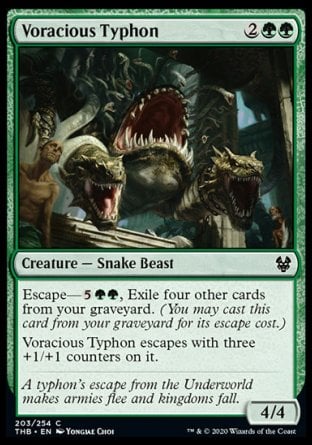
I’m generally not a buyer of “generic large creature with set mechanic” as one of the top commons, but this one certainly gets there. Like I mentioned, I had this in second place for a long time but ended up bumping it down just slightly because of the escape cost.
The Best Uncommons
In Preparation for GP New Jersey, I led the discussion for a Limited testing meeting featuring LordTupperware, MisterMetronome, and a few other folks from the Lords of Limited Discord (you can find the videos of those discussions here if you’re interested in taking a look).
When we ranked every card in the set, we had what we called the “Pharika’s Spawn” line. Pharika's Spawn is the best uncommon in the set and anything past that were the rares and mythics that we’d take over it P1P1. For my own rankings of every card in the set and the cards I take above Pharika’s Spawn, head on over here.

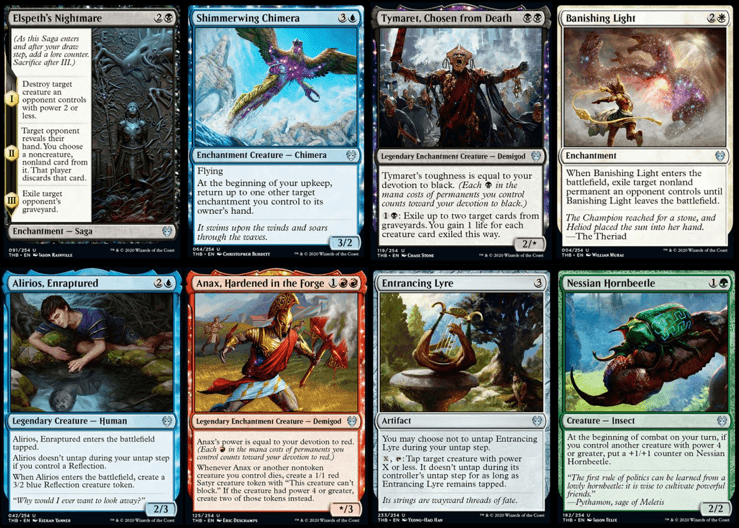
We also had a “Mire's Grasp” line. uncommons between the two lines were cards that we’d take below the best uncommon but above the best common. The list of cards that live in this space is short, but that’s more a function of how good Mire's Grasp is rather than a function of the uncommons being weak. Here’s a rough recreation of that list:
Cards That Are Better Than They Look
Heliod’s Intervention
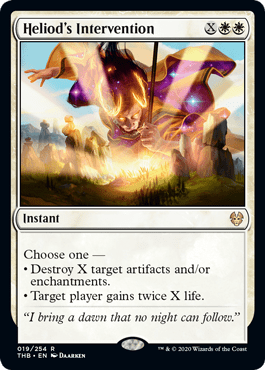
Heliod's Intervention is a card I had passed to me early pack 1 many times in the first week of the format and it certainly passes the Pharika's Spawn line. While I’m not excited about main decking Revoke Existence, I’ll happily main deck Plague Wind.
Nessian Boar

Nessian Boar looks like a somewhat risky card, and it is if you attack with it into open mana. But it’s also a huge threat and ends the game quickly if your opponent doesn’t have an answer for it. The key to this card is that you have agency over when it attacks and it’s a brick wall against practically every ground creature in the set until you choose to do so.
Tymaret, Chosen from Death
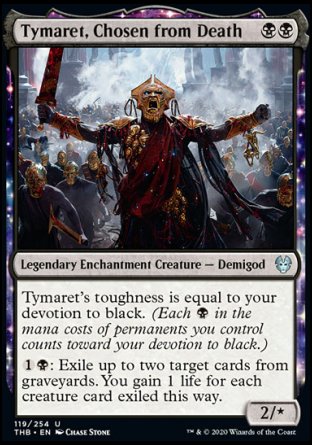
Scavenging Ooze Tymaret looks like a fine card but it’s just one of the best uncommons in the set. Aside from being a great blocker, mangling your opponent’s graveyard at will feels close to cheating in this format. It’s oppressive against a subset of decks and just plain great against the rest.
Agonizing Remorse
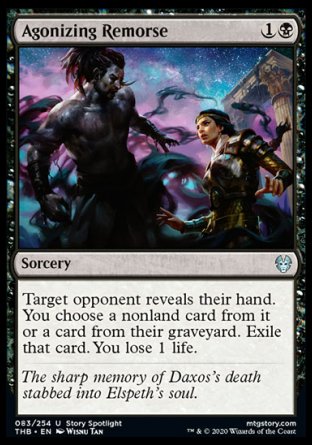
I think a lot of people looked at Agonizing Remorse and made the easy “this is a targeted discard spell and we generally don’t play those in Limited” shortcut, but it’s so much more than that. Agonizing Remorse snags any spell, not just non-creatures, so it’s way less likely to be a dead card. In addition, most discard spells are bad past turn five or so, but this one has the option to grab an escape card from the graveyard late game.
Inevitable End

Inevitable End looks like a punisher card, but it more often than not kills the thing you’ve enchanted on its first trigger. There are spots where it’s awkward because the creature you need dead is about to kill you, but the times when this is just sorcery speed, enchantment-based Murder more than make up for it.
The Binding of the Titans
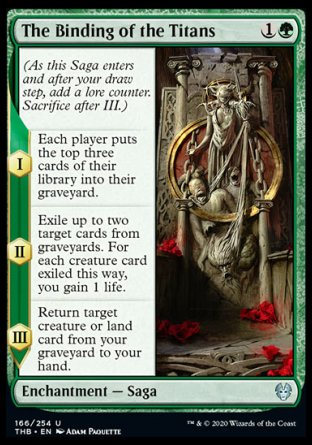
We touched on this one earlier, but it bears repeating that this basically reads “draw 2” in decks with a decent amount of escape cards since the three cards this puts into the grave is enough to escape most things.
Riptide Turtle

Another one that’s worth repeating how much better it is than it looks. This is the best Wall of Mist has ever been.
Cards That Are Worse Than They Look
Callaphe, Beloved of the Sea
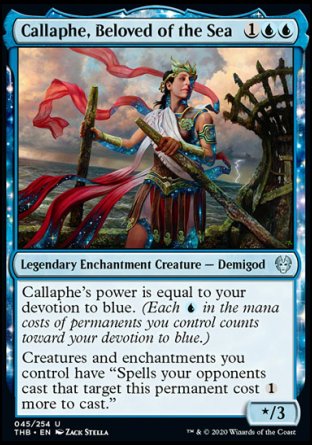
A bunch of words that equate to a Centaur Courser a lot of the time. U is a constellation color by design, but the payoffs are so weak that enchantment is often a drawback.
Haktos the Unscarred

I know many have this pegged as a stone-cold bomb, but I’ve found it plays worse than it seems. It is powerful and when it’s good it’s completely absurd, but when it’s bad it trades with a two or three. RW often wants to be heavy white so the mana cost isn’t trivial.
Siona, Captain of the Pyleas

Siona is a reasonable card but consider that you may end up in a spot in your draft where this is largely a worse Heliod's Pilgrim.
Ilysian Caryatid
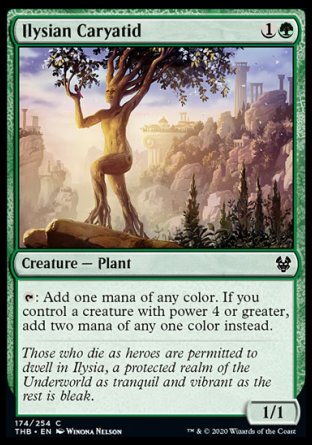
Ilysian Caryatid was in my top green commons for quite a while but has since been displaced. The card is still fine, but when a decent amount of games go to turn 12, it becomes a dead card relatively fast unless you have a way to cash it in like Soulreaper of Mogis. It’s still an OK card in RG as it can enable explosive starts and RG generally doesn’t want the game to last past turn 8 or so.
MTG Arena Specifics
For once, it seems that MTGA got the draft format right! Theros Beyond Death on Arena is a close emulation of non-bot drafting. There are no cards like Merfolk Secretkeeper or Heart-Piercer Bow that are obnoxious in multiples and largely ignored by the bots, and there are no colors or archetypes that are dramatically under-drafted.
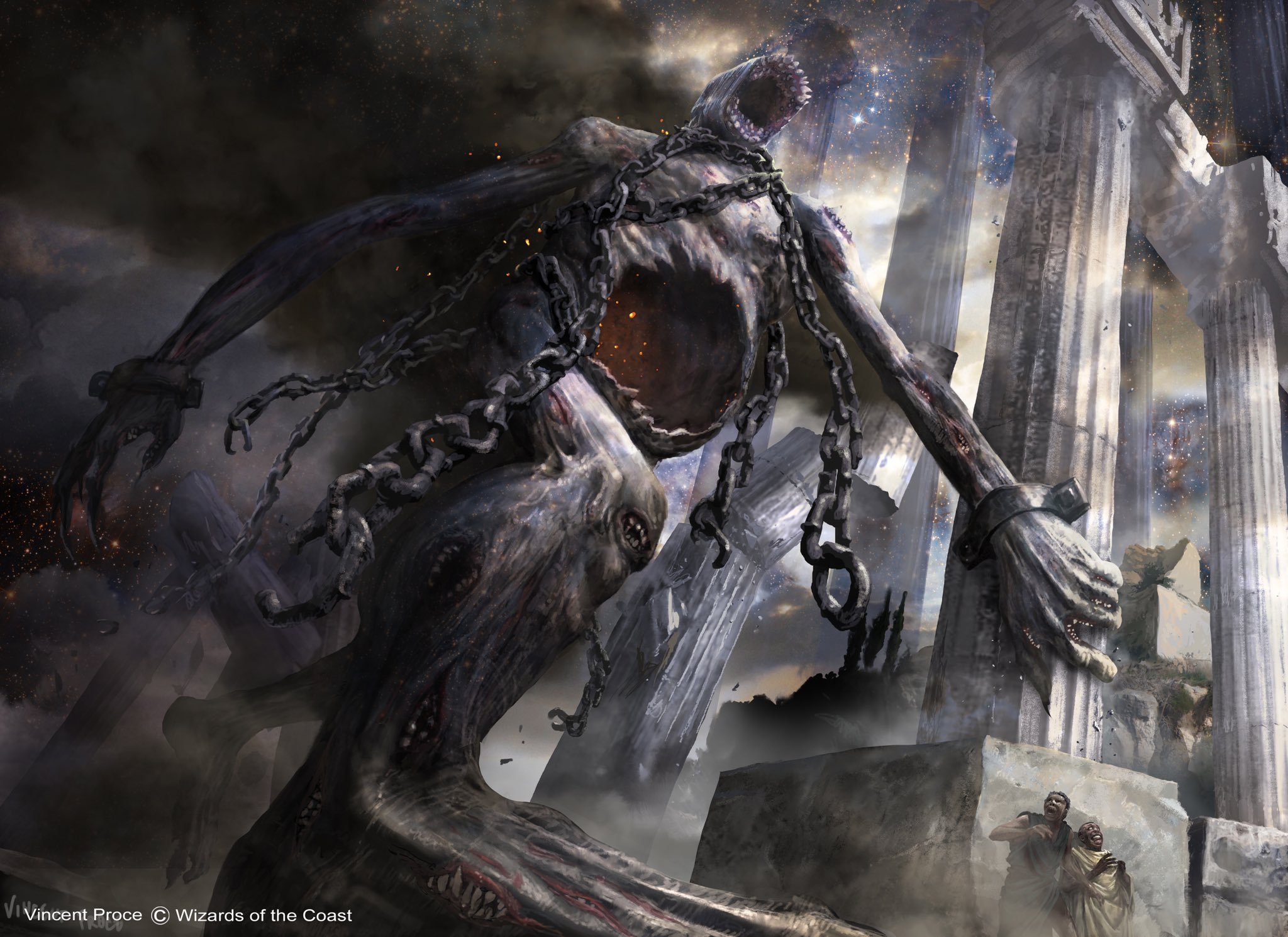
Kroxa, Titan of Death's Hunger
One thing to consider is that with black being as deep as it is, you may want to bias yourself into the color as it’s unlikely that four or more bots will be in black like they would be in a human draft. This means that you still have a good chance to pick up some of the better black cards even late in the pack or if two out of seven of the bots are in black.
Wrap-Up
I hope you’ve enjoyed this draft guide! I’m someone who deeply enjoys the puzzle of solving a Limited format, potentially even more than playing it, and Theros Beyond Death is a set full of moving parts and a noticeable lack of absolutes. I’ve really enjoyed the time I’ve spent with THB.
I respect the fact that it’s not everyone’s cup of tea, and I can admit that it would be a much better format if the top five cards in the set were thrown into the forge, but I think (at least for me) this set won’t outstay it’s welcome before the next format rolls around.
If you have any questions about the format, or would like further clarification about anything in this draft guide (or you just want to say hi), feel free to reach out to me on Twitter. Feel free to leave a comment below as well. For more Limited content from me, I co-host a weekly podcast called Limited Level-Ups.
Until next time!











8 Comments
This is one of the best draft articles I’ve ever read. It was comprehensive, well-written, and very informative. Do more of these for future sets!
Yes so right, thx for this article !
The Orzhov deck is Bounce Sacrifice and it’s incredibly strong if you build it right
Dawn Evangel and Hateful Eidolon are essential, so is having twelve or more enchantments
How the F are you getting Shadowspear in half of your decks??!
Great article, but I can’t believe people are still down on Stern Dismissal! With all the relevant auras around, it’s absurdly easy to 2-for-1.
This is one of the best limited articles I’ve ever read, thank you! Will definitely be checking out your podcast.
Love your article! Whenever I draft a set, I draft it once without reading one of these to see how good I’m getting. I’m proud to say I did something close to one of your archetypes! I still had some major problems but I feel like I’m getting better. Thanks for the content and good luck in future sets!!
Great to hear. So glad you enjoyed it!
Add Comment