
Emberheart Challenger | Illustration by Chris Rahn
Maybe you visit Draftsim looking for an edge at your Local Game Store’s prerelease or next week’s Commander night. But have you ever wondered what it takes to become a professional Magic player? At 2026's Las Vegas MagicCon, I had the pleasure of playing against Zev Goldhaber-Gordon in the Secrets of Strixhaven Sealed Pro Tour Qualifier (PTQ). Zev had previously played on the Aetherdrift Pro Tour and would qualify for the Limited Championship that weekend, ultimately leading to an invitation to next year’s PT Nauctis in Detroit at the Spotlight Series in Las Vegas.
Players can qualify for the Pro Tour through Regional Championships, direct qualifiers at MagicCons, Magic Spotlight Series events, or digital events on Arena or Magic Online. To reach a Regional Championship, players need to qualify by placing highly in a Regional Championship Qualifier (RCQ), whereas anyone can enter direct qualifiers at MagicCons. How else do you think I got to play against Zev?
But the big question is how do you get good enough to be at that level? Zev was kind enough to answer my questions about arriving on Magic’s biggest stage.
An Interview with Zev Goldhaber-Gordon

Cloudspire Coordinator | Illustration by Eduardo Francisco
Q: When did you play in your first serious event?
“From Khans of Tarkir until Battle for Zendikar, I was a casual player. I took a break for a few years and started to get more interested in improving around Kaldheim. My first competitive Rules Enforcement Level (REL) event was a March of the Machine PTQ in Minneapolis 45 minutes from college in my junior year, where I finished in the top 32. That was above my expectations but I didn’t place in the top 4, which is what I needed to get on the Pro Tour. That was an auspicious start and a big motivation to improve.”
Q: What did you do to improve after that first PTQ?
“After I graduated college, I planned to take a gap year before applying for PhDs. During that time, a friend from undergrad, Liam Etelson, and I assembled a group of strong players we knew as a hub for getting stronger ourselves, The Seedcore. I felt there was a vanishingly low chance that any of us would make the PT. Then Liam almost immediately qualified, I followed soon after, and our teammate Neil Estrada has been on the last three Pro Tours.”
Q: When did you make your first Pro Tour?
“I officially qualified for my first Pro Tour at the Duskmourn Limited 100k event a little over a year after that MOM PTQ. Duskmourn 100k was a more grueling version of the normal PTQs they run at MagicCons. In order to qualify and make the Top 8, I had to go through a Sealed on Day 1 and then two drafts on Day 2, at which point I would be in the Top 8 on Day 3. I piloted a very solid UW pool to 7-1 in Sealed Day 1 and then went 3-0 in the first Day 2 draft after being gifted one of the weirdest high level drafts I’ve done (a Urw Rooms deck that won by decking several times). I drafted RW in the second draft and went 2-1, bringing me to an overall record of 12-2 and a place in the Top 8. In the Top 8 I made the final match with my second RW deck of the tournament, but got steamrolled by Hall of Famer Paul Rietzl in the finals, finishing in second place. That was an astonishingly strong Top 8 including Magic legends Matt Nass and Mengu. I have the worst resume out of the eight, and it is not close: .
Editor’s note: Draftsim’s own Bryan Hohns placed 3rd in that same event.
Q: What kind of prep do you do before a big limited event?
“Before big Limited tournaments I jam a lot of drafts and spend a lot of time discussing set dynamics with friends. At one point we had a running card rating/averaging sheet and frequent internal draft pods firing.”
Q: What was prep like going into your first Pro Tour?
“For my first PT, Aetherdrift, I tested with a Seedcore team that was far larger than expected, ultimately nearing 20 or so as friends invited friends. It was a lot to organize but the testing was productive. We spent a week in the house, barely leaving due to the Chicago winter. We did one or two drafts every day with stronger Limited players shadowing weaker ones and taking notes on their picks, held a Limited meeting, and did a ton of Constructed play and sideboard discussion. One time a gaggle of us clustered around a laptop, suggesting the narrowest optimized lines to barely defeat some poor Boros mouse player on ladder. I brought two Constructed decks to the house but in retrospect should have brought more and been less sensitive to card availability as I ended up being unhappy with my deck choice for Constructed.”
Q: How did the Pro Tour go for you?
“I managed to squeak into Day 2 at 4-4, which was already beyond my expectations. Unfortunately, although my Day 2 draft seat was powerful, I misbuilt by attempting the Push the Limit combo instead of just streamlining my UR discard deck since I had two Marauding Makos and two Scrounging Skyrays. I ended up repeatedly flooding out and went 0-3 in the draft in what could have been a 3-0 seat if I had calmed myself down and fixed my build postboard. After that, I lost the first 2 rounds of Constructed before rallying for a 3-0 finish. Unfortunately I needed to go 10-6 to qualify for the next PT, but finished 7-9. In retrospect, I should have registered the Gruul Mice deck that I was far more comfortable on, but I was too scared of the Esper Pixie matchup. Despite the poor day 2 results, I was ecstatic to draft a second time.”
Q: What was the biggest surprise playing in a Pro Tour?
“Everyone is human, especially on the biggest stage. Some of the best players in the world punted against me, but it didn’t matter, because I punted even harder. Magic is an incredibly hard game and the most complicated one ever made, so even at the top tier, games can come down to both big and little mistakes instead of inspired plays. It’s not an indictment of the skill of Pro Tour players, just a demonstration of how hard it is to make the right choice again and again for hours on end.”
Q: What was the Rules Enforcement like on the Pro Tour?
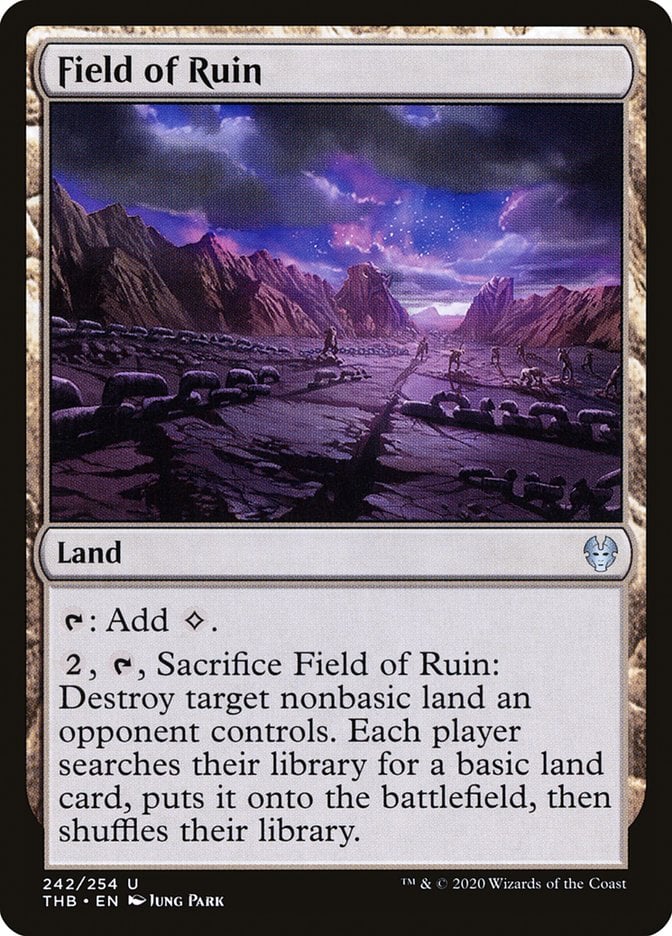
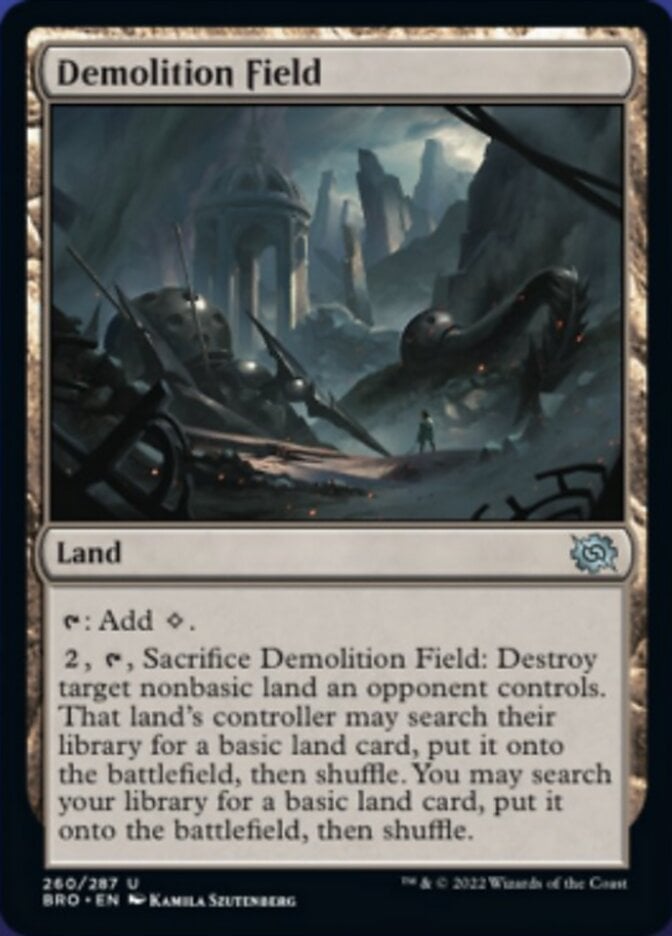
“It was shockingly chill. One of my teammates, Steve Gan, was playing a match against top tier pro Jesse Hampton, who played a Japanese Field of Ruin. The only problem was that Field of Ruin wasn’t legal in Standard, although the nearly-identical Demolition Field was. When Jesse declared he was “activating his Demolition Field,” though, Steve sheepishly pointed out the mistake. Jesse had mistakenly gotten a Japanese Field of Ruin and had no idea. In Competitive REL, that would likely be a game loss for incorrect decklist submission. In Pro REL, the judge instructed them to play it like a Demolition Field and for Jesse to find a replacement between rounds. Everyone is interested in making games go as smoothly as possible at the Pro Tour, and the smaller crowd of often familiar faces makes that easier.”
Q: After not re-qualifying for the Aetherdrift Pro-Tour, how easy was it to get back?
“I started playing in Bay Area RCQs most weekends and went to some RCs, but couldn't convert them. I also fell short of qualifying for the Arena Championships or the MTGO Champions Showcase. Since grad school started, I've only been able to go to a few Limited events, but at long last I qualified for the Limited Championship later that weekend at MagicCon Vegas, and for the Pro Tour at the Team MSH Spotlight over the summer.”
Q: Has being a Pro Tour competitor worked out for you financially?

“On my one Pro Tour appearance I got a snazzy Karn Liberated, which is worth far less than the thousands-of-dollars Tifa Lockharts distributed at MagicCon Final Fantasy. I’m lucky to be in the green, mostly on the back of my DSK 100k prizing ($10k), selling expensive promos, and some Arena Direct prizing.
“For those who are less fortunate in their tournament results (and I say fortunate, not skilled, because almost nobody can consistently stay in the green on skill alone), I do think it is problematic how socioeconomic status-gated competitive Magic is. Flights are more expensive than ever, as are decks, so even saving money by splitting an Airbnb with other competitors (usually a few hundred for the weekend), almost nobody comes out ahead of any particular tournament by much. At Spotlight Vegas MSH, Neil, Liam, and I made $1,250 each for making Top 4, enough to cover perhaps three tournaments. The path to break into competitive play is getting thinner and thinner without dumping a bucket of cash on the table.”
Q: What’s your goal for Pro Tour Nauctis?
“PT Nauctis is a Modern tour, which tends to be more stable than Standard, and I am planning on preparing for the coming nearly half a year so I can focus on Limited when it gets spoiled. I’d like to put up a positive Modern record. I have access to the resources and teammates to become a strong Modern player and I don’t want to waste this opportunity. It’s unclear if I’ll be able to participate in a team house this cycle with my PhD keeping me busy, so I need to come into the testing season fully prepared.”
Where can people follow you?
Bluesky: @zergog.bsky.social
I’d also like to thank the Seedcore, Scrapheap, and wherever I go with Liam and Neil for PT testing.
Wrap Up
Last One Standing | Illustration by Svetlin Velinov
I hope you’ve learned a little more about the competitive Magic scene thanks to our little insider’s look. Thanks again to Zev Goldhaber-Gordon for taking the time to sit with us.
Let us know over on the Draftsim Discord and in the comments section if you want to see more interviews like this, and the types of people or topics you’d like us to explore. Who knows? If you’re interested, we might be able to post them to our YouTube channel, The Daily Upkeep.
Until next time, good luck out there!
Follow Draftsim for awesome articles and set updates:









Add Comment